
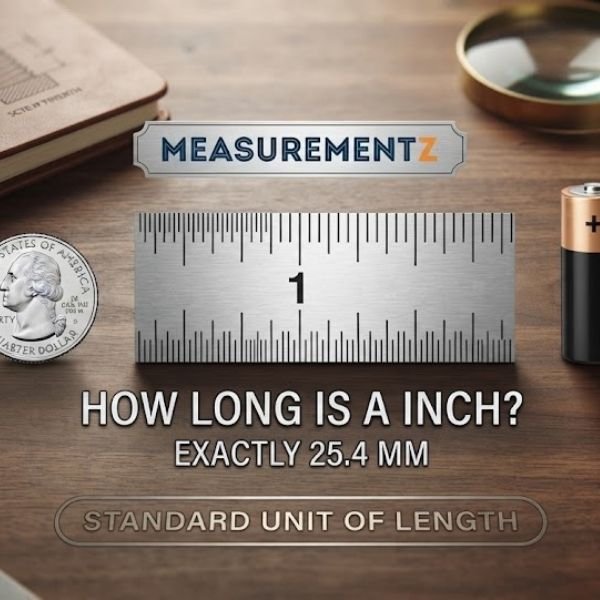
An inch is exactly 2.54 centimeters, or 25.4 millimeters, if you want the science-y version.
But numbers on a page don’t help much when you’re staring at a box online, wondering if that phone case will actually fit.
You need something real. Something you can picture without pulling out a ruler.
That’s what this guide gives you. Ten everyday objects that measure roughly one inch, plus a few extra tricks for measuring without a ruler when you’re in a pinch.
By the end, you’ll never have to guess at inches in daily life again.
Why People Struggle With Inches (And Why It Matters)
Here’s the honest truth. Most of us don’t carry a measuring tool in our back pocket.
We eyeball things. We guess. And half the time, we get it wrong, especially when shopping online or trying to fit furniture through a doorway.
The imperial system can feel confusing next to the metric system, especially if you grew up using centimeters and meters instead of feet and inches. That gap causes real problems, like ordering the wrong size shelf or picking a phone case that’s too snug.
This is where visual measurement comparison saves the day. Once you connect an inch to something you already own, the confusion disappears.
COMPARISON TABLE: INCH VS OTHER UNITS
Let’s get the numbers out of the way first. A quick measurement conversion chart makes everything else in this article click faster.
| Unit | Equivalent to 1 Inch |
| Centimeter | 2.54 cm |
| Millimeter | 25.4 mm |
| Foot | 0.083 feet |
| Yard | 0.0278 yards |
| Meter | 0.0254 meters |
Keep this table handy. Whether you’re doing a length conversion for a school project or double-checking a length estimation before buying furniture, these numbers are your backup.
Notice how small an inch actually is compared to a foot or yard? That’s exactly why picturing it through objects works so much better than memorizing math.
VISUAL COMPARISON TABLE: WHAT AN INCH LOOKS LIKE
Numbers are fine, but pictures stick. Here’s a fast size comparison chart using items most people already have lying around the house.
| Object | Approximate Measurement |
| Standard paperclip | 1 inch long |
| Quarter coin | Just under 1 inch wide |
| Adult thumb joint | About 1 inch |
| Dice (one side) | 5/8 to 3/4 inch, close to 1 inch |
| Bottle cap | Roughly 1 inch across |
| USB Type-A connector | About 0.5 to 0.75 inch |
| Adult finger width | Close to 1 inch |
| Lego brick height | About 0.36 inch, a fraction of an inch |
| Sewing pin head section | A tiny sliver of an inch |
| Small key | About 1 inch wide |
This isn’t a table you need to memorize. Just glance at it whenever you need a quick measurement estimate and you’re already ahead of guessing blind.
Now let’s break each one down, because context makes all the difference.
1. A Standard Paperclip
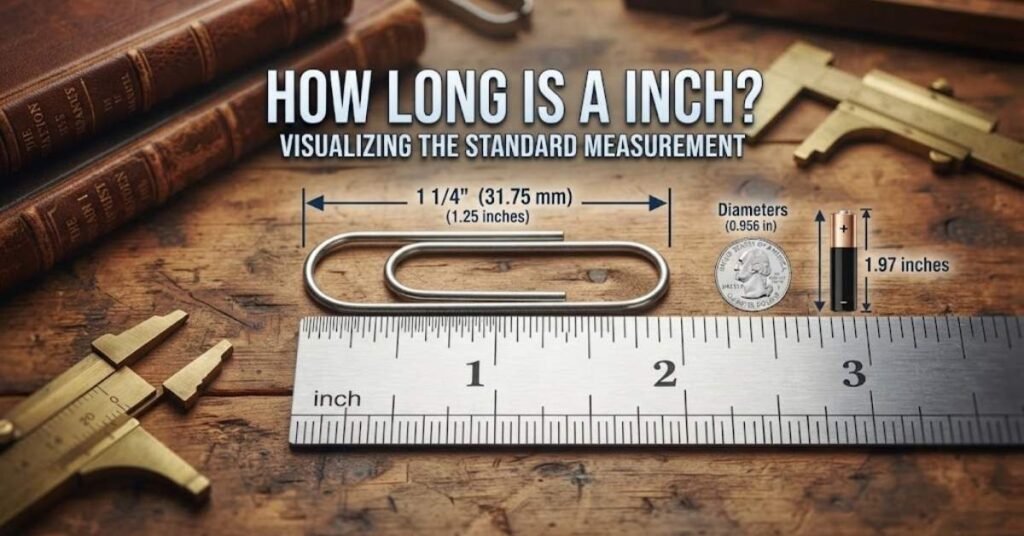
Grab a standard paperclip from your desk drawer right now. Go on, we’ll wait.
That little metal loop measures almost exactly one inch in length. It’s one of the most reliable one-inch reference objects you’ll find in any office or home.
Next time someone asks how long is an inch, just hand them a paperclip. It’s simple, it’s everywhere, and it never lies.
2. The Width of a Quarter Coin
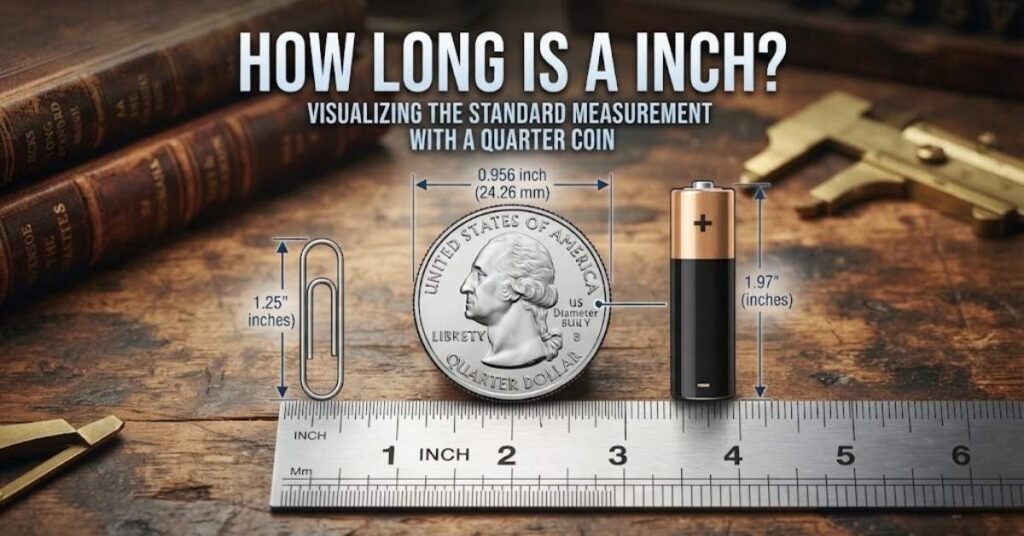
Coins make fantastic measuring backups because everyone has one somewhere. The U.S. quarter coin measures about 0.955 inches across, just a hair under a full inch.
This coin measurement trick works great when you’re shopping and need a fast size estimation for something small, like a charm or a button. Slide a quarter next to the item in a photo, and you’ve got instant scale.
Photographers actually use this trick constantly. Next time you sell something online, drop a quarter beside it for a clear visual reference buyers will appreciate.
3. The Length of a Thumb Joint
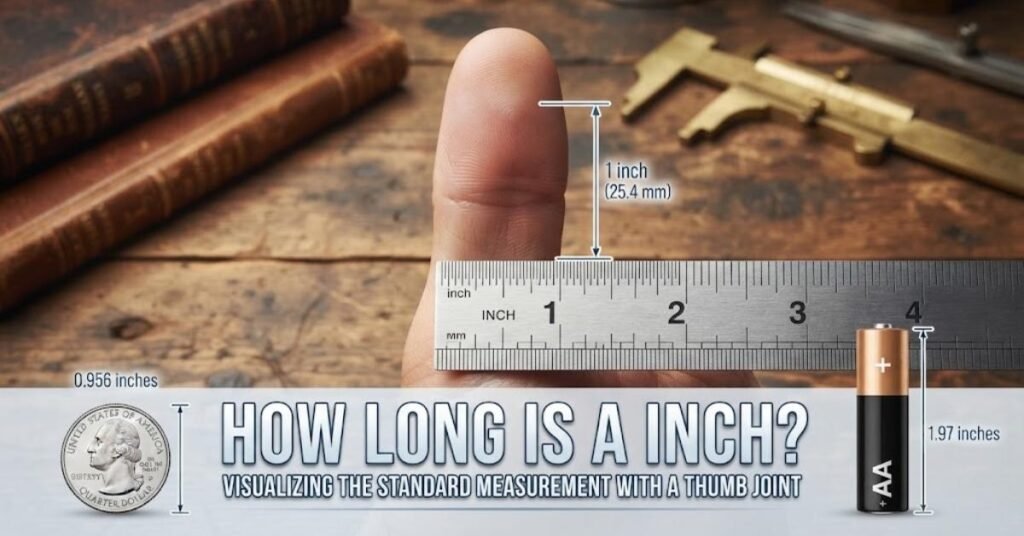
Here’s a fun one. Look at your thumb and find the joint closest to your nail.
From the tip to that first knuckle, most adults measure close to one inch. This kind of body-based measurement has been used for centuries, long before rulers were standard equipment.
It won’t be perfectly precise since hand size varies from person to person. But in a pinch, your own thumb becomes a decent backup ruler.
4. A Dice (One Side Length)
Board game night just got educational. A standard six-sided dice used in most games measures around 5/8 to 3/4 inch per side, creeping close to a full inch on larger versions.
This cube-shaped object gives you a solid 3D sense of what an inch looks like from every angle, not just length. That’s genuinely useful because most objects we measure aren’t flat lines, they’re chunky little shapes.
Next time you’re setting up board games with the kids, point out the dice size. It doubles as a sneaky little geometry lesson.
5. The Diameter of a Bottle Cap
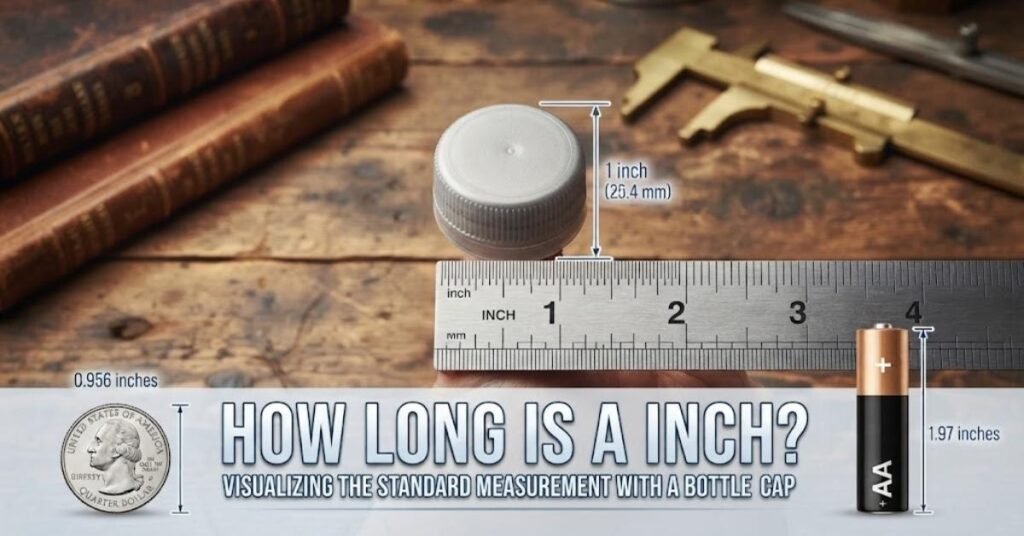
Pop open a soda and take a look at the cap. A typical plastic bottle cap measures roughly one inch across.
This bottle cap diameter makes it one of the easiest circular measurement examples around, especially since caps come in nearly every kitchen and recycling bin. Round objects are trickier to estimate than straight lines, so having a familiar circle helps a lot.
Try this next time you’re wrapping a small circular item for shipping. A bottle cap gives you an instant gut check on size.
6. A USB Flash Drive Connector
Tech lovers, this one’s for you. A standard USB Type-A connector, the metal part you plug into your laptop, measures about half an inch to three-quarters of an inch wide.
It’s smaller than a full inch, but it’s a genuinely useful comparison for technology dimensions. Ever tried describing a port size to someone over the phone? This example does the job instantly.
Precision manufacturing for electronic accessories relies on measurements this small being exact, down to a fraction of a millimeter. That’s wild when you think about how casually we plug and unplug these things every day.
7. The Width of an Adult Finger
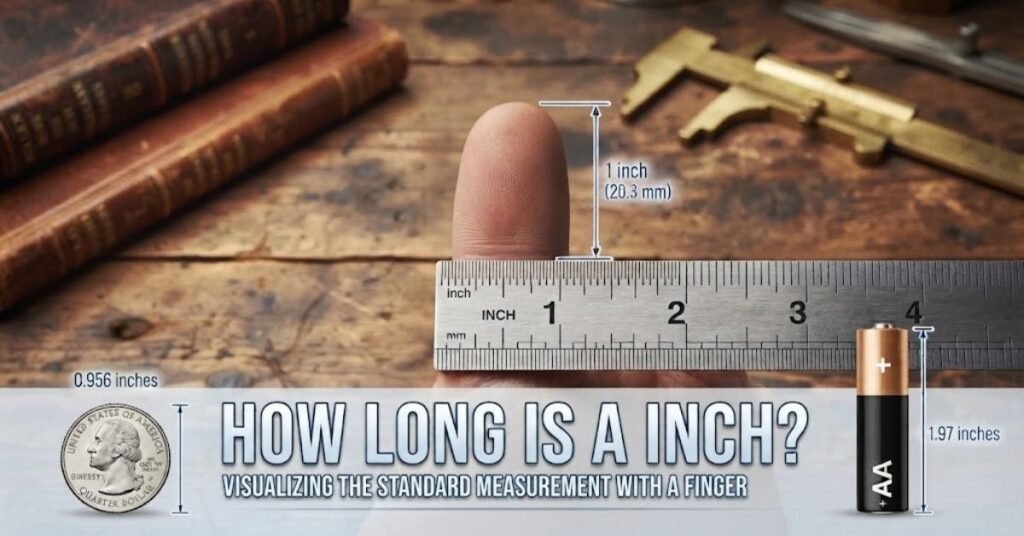
Hold up your index finger and look at it straight on. The adult finger width, measured across the middle section, usually lands close to one inch.
This is another handy body-based measurement you’ll always have with you. No ruler, no app, just your own hand doing the work.
Combine this with the thumb joint trick from earlier, and you’ve basically got a built-in measuring kit attached to your wrist.
8. A Lego Brick Height
Parents stepping on these in the dark know this pain well. A classic 2×4 Lego brick stands about 0.36 inches tall, smaller than a full inch but a useful reference point anyway.
These Lego measurements are famous for being incredibly consistent. Every brick made since the 1950s fits perfectly with ones made decades apart, which says a lot about how seriously toy companies take standardized measurements.
If you’ve got kids or grandkids, next time you’re cleaning up their toy bin, mention this fun fact. It might just buy you a few extra minutes of peace.
9. The Length of a Sewing Pin Head Section
Crafters and quilters, you’ll know this one well. The rounded top section of a sewing pin, often called the pin head section, is a tiny fraction of an inch on its own.
But measure a full straight pin from tip to head, and you often land right around one inch total. This makes pins a handy sewing tools reference for anyone working on fabric crafts or other DIY projects.
Next time you’re pinning a hem or laying out a pattern, you’re literally holding an inch-long measuring stick without even realizing it.
10. A Small Key Width
Check your keyring for a moment. Many small key designs, especially older drawer key styles, measure close to one inch across the widest point.
This key width varies depending on the lock type, but it’s a solid standard dimensions reference for smaller keys used in cabinets, mailboxes, and older furniture. House key blanks tend to run a bit longer in total length, but the width often stays close to that one-inch mark.
Next time you’re organizing a junk drawer full of mystery keys, this trick helps you guess their purpose based on size alone.
Everyday Situations Where Knowing an Inch Actually Helps
Let’s talk about real-world measurement examples beyond just trivia. This knowledge actually saves you time and money.
Online shopping measurements trip people up constantly. Ever bought a phone case that didn’t fit, or a picture frame that was way too small? Knowing what an inch looks like helps you catch sizing mistakes before you click “buy.”
Home measurement projects benefit too. Hanging shelves, measuring windows for curtains, or figuring out if furniture will clear a doorway all rely on quick, confident length estimation. You don’t always need a tape measure if you’ve trained your eye using common household items like the ones above.
Quick Tricks for Estimating Length Without a Tool
Sometimes you just don’t have a ruler handy. That’s fine, here are a few backup methods worth remembering.
- Use your thumb joint for quick one-inch checks
- Compare small objects side by side with a quarter coin
- Count Lego bricks stacked together for longer distance measurement
- Use a paperclip chain for rough foot-long estimates
- Trust your palm width for roughly four-inch reference points
These everyday measuring techniques won’t replace accurate measurement tools for serious projects like construction measurements. But for casual estimates, they work surprisingly well.
Why Precision Still Matters in Certain Situations
Not every situation allows room for guessing. DIY projects, craft projects, and anything involving cutting materials need real measurement accuracy.
For those jobs, grab an actual measuring tool. A precise measurement avoids wasted materials and frustrating do-overs, especially with wood, fabric, or metal that can’t be un-cut once you’ve made the wrong call.
That said, having a mental library of one-inch reference objects still helps you double check your ruler readings or estimate quickly before committing to a full measurement session.
Final Thoughts
An inch might seem tiny, but it shows up everywhere once you start noticing it. From your paperclip length to the width of your thumb, these little comparisons turn an abstract number into something you can actually feel and see.
Next time someone asks how long is an inch, skip the math lecture. Just point to a quarter coin measurement or grab a dice from the game shelf.
Inch visualization doesn’t need to be complicated. It just needs the right everyday object standing next to it.
Got a favorite trick for estimating small measurements? Drop it in the comments, we’d love to hear how you handle it without a ruler in sight.
Frequently Asked Questions
How long is an inch exactly?
An inch equals 2.54 centimeters or 25.4 millimeters, based on standardized U.S. customary units.
What everyday object is closest to one inch?
A standard paperclip and a quarter coin are two of the most reliable one-inch reference objects most people have on hand.
Can I measure an inch using my body?
Yes. Your thumb joint and finger width both land close to one inch for most adults, making them handy backup tools.
Is an inch bigger or smaller than a centimeter?
An inch is bigger. One inch equals 2.54 centimeters, so centimeters are the smaller unit by comparison.
Why does the U.S. still use inches instead of the metric system?
The United States adopted imperial measurements early on and never fully switched to the metric system, unlike most other countries worldwide.
How many inches are in a foot?
There are 12 inches in one foot, and three feet make up a full yard.

Ethan Whitmore is the editor and administrator of Stylovix, dedicated to making measurements, conversions, sizes, and dimensions simple, accurate, and easy to understand.
