
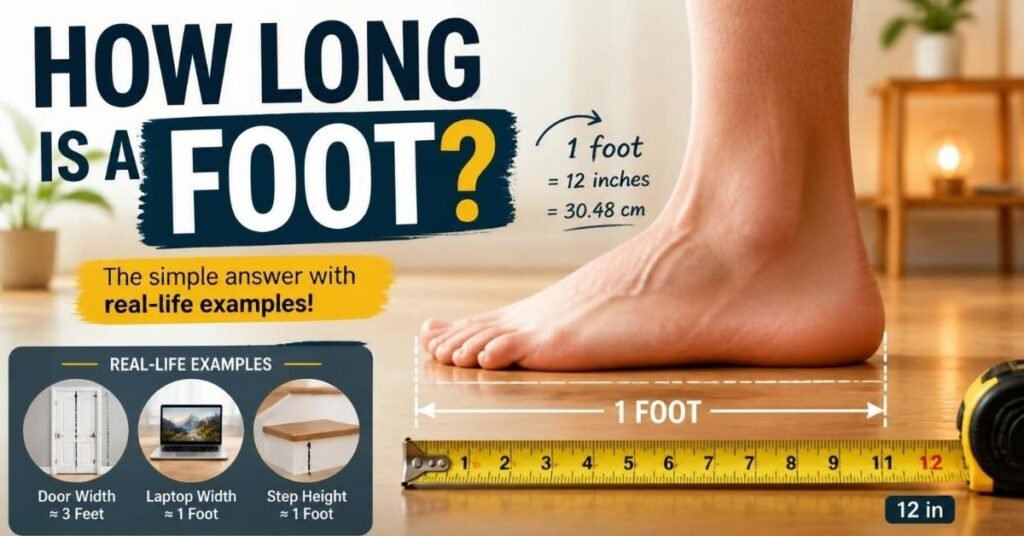
You’ve heard someone say “about a foot long” a hundred times. But what does that actually look like?
A 1 foot measurement equals 12 inches, or 30.48 centimeters if you’re using the metric system. That’s roughly 304.8 millimeters, or 0.305 meters if you want to get precise.
Knowing this sounds simple on paper. But picturing it in real life? That’s a different story.
This guide walks you through 12 everyday objects that are close to one foot in length. No tape measure needed. Just your memory and a bit of curiosity.
Whether you’re setting up a desk setup, packing a travel backpack, or just trying to win a bar bet about object size, this list has you covered.
Quick Comparison Table: Items That Are 1 Foot Long
Sometimes a table says more than a paragraph ever could.
Here’s a quick reference for every item on this list, side by side.
| Object | Approx. Length | Category |
|---|---|---|
| Standard Ruler | 12 in / 30.48 cm | Measuring tools |
| Subway Footlong | 12 in / 30.48 cm | Food |
| Laptop Width | 11-13 in | Electronics |
| Sheet of Paper (long side) | 11-11.7 in | Office supplies |
| Two Dollar Bills | 12.4 in | Currency |
| Adult Shoe | 10-12 in | Footwear |
| Tablet Device | 9.7-11 in | Electronics |
| Small Pizza | 10-12 in | Food |
| Frying Pan | 10-12 in | Kitchen |
| Vinyl Record | 12 in | Music |
| Compact Keyboard | 11-12 in | Electronics |
| Small Backpack | 12-14 in | Storage |
Bookmark this table. It’s handy the next time you need a visual reference without digging out a measuring tape.
1. Standard Ruler
This one’s the obvious starting point, right?
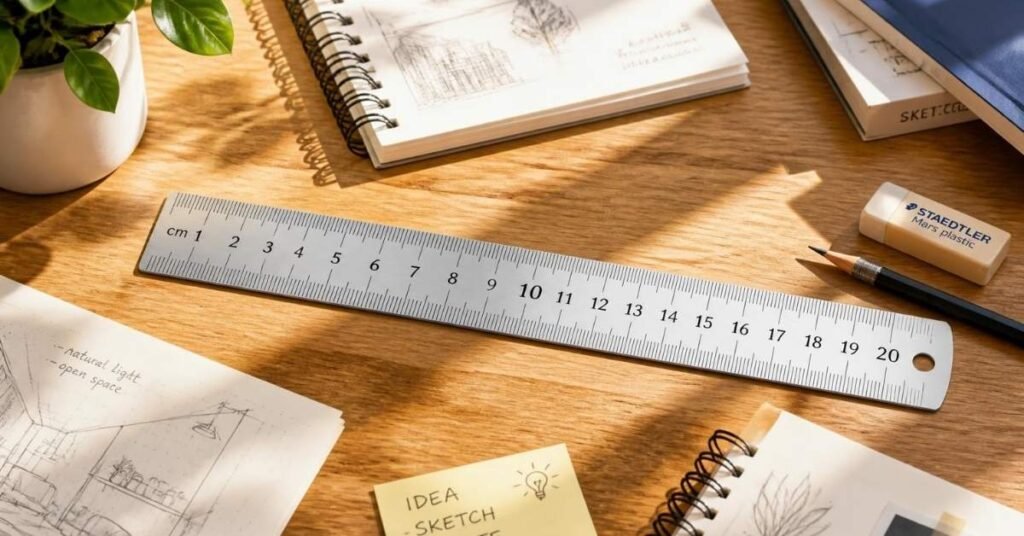
A standard ruler is the textbook example of one-foot measurement. It’s exactly 12 inches long, marked out in inches on one edge and often centimeters on the other.
Teachers hand these out in classrooms for a reason. They’re a reliable reference tool that hasn’t changed much in generations.
If you ever want to double check any item on this list, grab one of these first. It’s the simplest straight edge you’ll find in any drawer.
2. Subway Sandwich (Footlong)
Subway didn’t pick “footlong” as a name by accident.
Their signature footlong sandwich measures close to 12 inches end to end, matching the exact length of a standard ruler. It’s become such a familiar size that people use it as a mental measuring stick without even realizing it.
Next time you order one, notice how it stretches nearly across a standard dinner plate. That’s your one-foot object lesson served up with lettuce and mustard.
Portion control fans might wince, but this sandwich remains one of the most recognizable real-life examples of a foot in the wild.
3. Laptop Width
Ever wonder why some laptops feel bulky and others slide right into a bag?
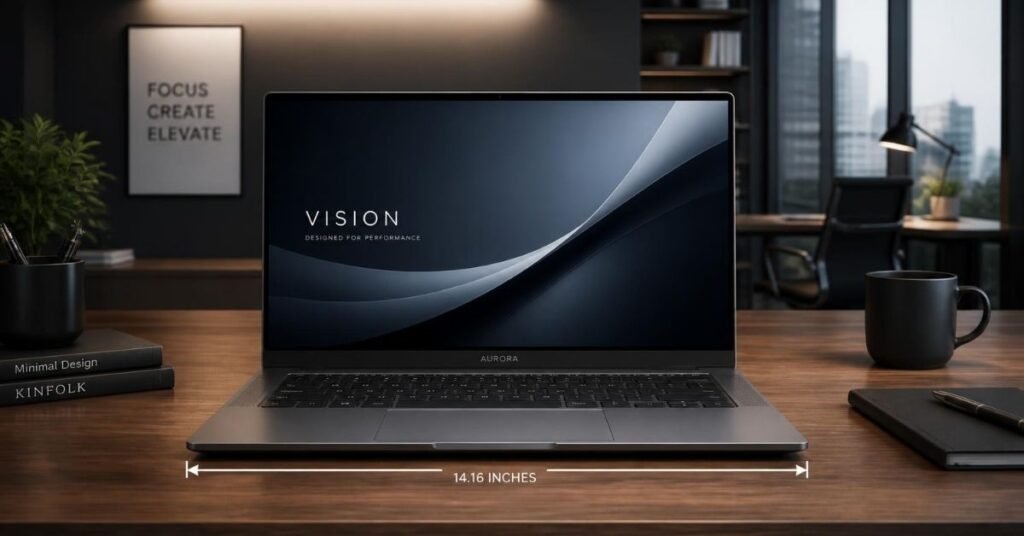
A mid-sized laptop typically measures somewhere between 11 and 13 inches wide, putting it right in the neighborhood of a foot. Compact ultrabooks lean closer to 11 inches, while larger models creep past 13.
This matters more than you’d think for workspace planning. If your desk is tight on space, knowing your laptop width helps you figure out what else fits beside it.
Next time you’re shopping for a compact laptop, picture it sitting next to a ruler. That mental trick works better than any spec sheet.
4. Sheet of Paper (Long Side)
Paper dimensions vary more than people assume.
Letter size paper, the standard in the US, measures 11 inches on its long side. A4 paper, used across most of the world, comes in at 11.7 inches, just a hair under a full foot.
Either way, you’re within an inch of one foot whenever you hold a page lengthwise. That’s useful to know for printing, drawing, or just organizing documents on a cluttered desk.
Next time you’re stacking papers for a project, remember: you’re basically stacking foot-long strips.
5. Two Dollar Bills

Here’s a fun one most people never think about.
A single dollar bill measures 6.14 inches long. Line up two dollar bills end to end and you land at roughly 12.4 inches, just a touch over a foot.
This trick works in a pinch if you don’t have a ruler or measuring tape nearby. Got a couple of bills in your wallet? You’ve basically got a backup measuring tool.
It’s not perfectly accurate, but for a rough estimate length check, it does the job.
6. Shoe (Adult Average)
Shoes are one of the most personal everyday objects we own, but their sizing lines up surprisingly well with a foot.
An adult shoe, especially a men’s shoe in sizes 10 to 12, measures close to 12 inches from heel to toe. Women’s shoes run a bit shorter on average, landing closer to 10 or 11 inches.
That’s not a coincidence. The word “foot” as a unit literally traces back to human foot length in ancient measurements. So when you slip on your shoes each morning, you’re wearing a rough approximation of the very unit this whole article is about.
7. Tablet Device

Tablets sit in an interesting size gap between phones and laptops.
Most tablet devices measure between 9.7 and 11 inches diagonally, depending on the model. That’s the diagonal measurement, not the width, so it’s slightly under a full foot in most cases.
Larger tablets marketed for creative work push closer to that 12-inch mark. If you’re deciding between a tablet and a compact laptop for your bag, this size difference matters more than most reviews mention.
Hold one up next to a ruler sometime. The comparison might surprise you.
8. Pizza (Small Size)
Pizza sizing gets confusing fast, but here’s the simple version.
A small pizza typically measures 10 inches across, while some shops stretch their “small” up to 12 inches. That puts it right in the range of a one-foot object, especially at the larger end.
This is genuinely useful for family meals. Knowing the pizza diameter ahead of time helps you figure out how many pies to order without guessing. Nobody wants to run short on slices halfway through movie night.
9. Frying Pan Diameter
Kitchen gear rarely gets measured with a ruler, but it should.
A common frying pan diameter for home cooking sits between 10 and 12 inches, with the 12-inch pan being a favorite for family meals. That size gives enough room to cook multiple servings without crowding the pan.
If you’re restocking your cookware, this measurement helps you match pan size to burner size. A 12-inch pan on a small burner heats unevenly, so this detail actually affects your cooking results.
10. Vinyl Record
Vinyl has made a real comeback, and its sizing hasn’t changed one bit.
A standard vinyl record measures exactly 12 inches in diameter, a size that’s stayed consistent since the format’s early days. Collectors and vinyl enthusiasts know this number by heart.
That consistency is part of the charm. Whether you’re buying a record pressed last year or one from decades ago, the record diameter stays the same. It’s one of the most exact one-foot measurement examples on this entire list.
11. Keyboard Width (Compact)
Desk setups have gotten smaller, and keyboards followed suit.
A compact keyboard, the kind without a number pad, typically measures around 11 to 12 inches wide. Full-sized typing keyboards run longer, often past 17 inches, so the compact version saves real desk space.
If you’re building a minimalist desk setup, this smaller footprint matters. It leaves room for a mouse, notebook, or coffee mug without everything feeling cramped.
12. Small Backpack Height
Backpacks come in wildly different sizes, but the smaller ones land close to our target length.
A small backpack, the kind used for day trips or as a school backpack, usually measures 12 to 14 inches in height. That’s enough storage space for a laptop, a few books, and a water bottle without becoming bulky.
For travel, this size hits a sweet spot. It fits under most airline seats while still holding your essentials. Next time you’re shopping for one, check the height tag. Chances are it’s hovering right around a foot.
Bonus: Why Understanding One Foot Helps With Space Planning
Here’s something most guides skip entirely.
Knowing what a foot looks like isn’t just trivia. It’s a practical skill for space planning, whether you’re arranging furniture, fitting a shelf into a hallway, or figuring out if a desk will clear a doorway.
Interior designers use this kind of visual understanding constantly. They don’t always pull out a measuring tape for quick decisions. Instead, they rely on familiar objects, like a ruler or a record, as mental reference points.
You can do the same. Next time you’re deciding if something fits, picture one of the twelve items above sitting in that space. It beats guessing.
How Measurement Systems Compare: Imperial vs Metric
The imperial measurement system and the metric system don’t always play nice together, and that trips people up constantly.
In the imperial measurement system, length breaks down into inches, feet, yards, and miles. A foot sits right in the middle, easy to visualize but tricky to convert without a conversion chart.
The metric system, used almost everywhere outside the US, relies on millimeters, centimeters, and meters. One foot converts to 30.48 cm, or 304.8 mm if you need finer detail.
Neither system is wrong. They’re just different tools for the same job, kind of like using a spoon versus chopsticks. Once you know the conversion, switching between them gets easier with practice.
Common Mistakes People Make When Estimating a Foot
Even people who measure things for a living get this wrong sometimes.
One common slip is confusing a foot with a shoe size length, assuming they match exactly. They’re close, but rarely identical, since shoe sizing includes extra room for comfort.
Another mistake happens with paper. People assume both letter size paper and A4 paper hit exactly 12 inches. Neither does. Both fall just short, though close enough for casual estimate length purposes.
The fix is simple: when precision actually matters, skip the mental math and grab an actual ruler or measuring tape. Save the estimation tricks for casual, low-stakes moments.
FAQs
How long is a foot in inches?
A foot equals exactly 12 inches. This has been the standard in the imperial measurement system for centuries and hasn’t changed.
How can I measure a foot without a ruler?
Try stacking two dollar bills end to end, or use a standard shoe as a rough guide. Neither is perfectly precise, but both get you close enough for everyday estimation without tools.
Is a foot the same worldwide?
Not quite. The imperial measurement system, including the foot, is mainly used in the United States. Most other countries rely on the metric system instead, measuring in centimeters and meters.
Why is it called a foot?
The name comes from ancient measurements based on the length of a human foot. Early societies needed a practical, always-available reference, and feet were right there.
What is 1 foot in centimeters?
One foot equals 30.48 centimeters. That’s the number to remember if you’re converting between the imperial and metric systems on the fly.
Conclusion
A foot isn’t just a number on a ruler. It’s baked into the sandwiches you eat, the shoes you wear, and the records spinning on your turntable.
Once you start noticing these everyday objects, you’ll never look at a foot-long measurement the same way again. It stops being abstract and starts being something you can actually picture.
So next time someone says “about a foot,” you won’t need a measuring tape to know exactly what they mean.

Ethan Whitmore is the editor and administrator of Stylovix, dedicated to making measurements, conversions, sizes, and dimensions simple, accurate, and easy to understand.
