
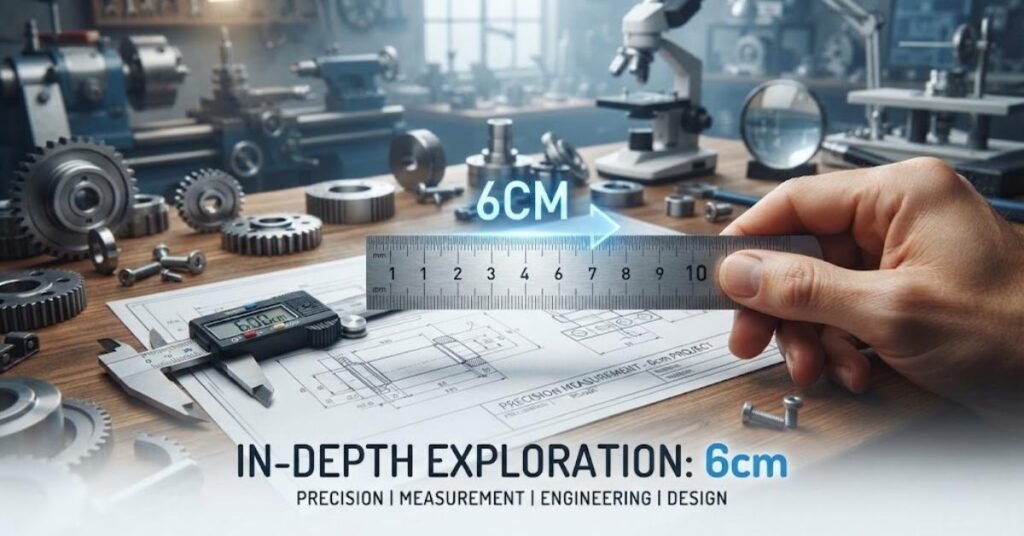
Ever dug through a drawer for a ruler and come up empty? Or spotted “6 cm” on a product page and wondered how big that really is?The short answer: 6 cm equals 60 millimeters, or about 2.36 inches. That’s close to the width of a standard playing card.
You’ll also find it near a credit card’s short side, a golf tee, and an AA battery. Below, you’ll get ten everyday objects near this size, plus easy tricks to estimate it with your hands.
Table of Contents
- How Big Is 6 cm?
- Quick Comparison Table
- How to Measure 6 cm Without a Ruler
- 1. Credit Card Width
- 2. Golf Tee
- 3. Lipstick Tube Cap
- 4. Large Paper Clip
- 5. Matchbox Length
- 6. Small Glue Stick
- 7. AA Battery Height
- 8. Toothpaste Travel Cap
- 9. Tea Light Candle Diameter
- 10. Pocket Comb Width
- 6 cm in Inches and Nearby Sizes
- Why 6 cm Matters for Travel and Daily Life
- Mistakes to Avoid When Estimating 6 cm
- Conclusion
- FAQs
How Big Is 6 cm?
Six centimeters is a small length you handle daily without noticing.
It equals 60 millimeters, or 2.36 inches if you think in inches.
Picture a little more than two inches.
It’s shorter than a standard pen and longer than most coins.
Product listings use this size for travel items, cosmetics, and craft parts.
So a quick mental picture can save you a return trip.
Quick Comparison Table
Here’s a fast size comparison of the objects in this guide.
Sizes vary by brand, so treat these as real-world comparison points, not exact specs.
| Object | Typical measurement | Distance from 6 cm |
| Standard playing card (width) | About 6.35 cm | Slightly bigger |
| Credit card (short side) | About 5.4 cm | Slightly smaller |
| Short golf tee | About 5.4 cm | Slightly smaller |
| Lipstick tube cap | About 5 to 6 cm | Very close |
| Jumbo paper clip | About 5 cm | Slightly smaller |
| Matchbox (length) | About 5 to 6 cm | Very close |
| Small glue stick | About 5 to 6 cm | Varies by brand |
| AA battery | About 5.05 cm | Slightly smaller |
| Travel toothpaste cap and neck | About 4 to 6 cm | Varies by brand |
| Tea light candle holder | About 6 cm | Very close |
| Pocket comb (folded or wide) | About 5 to 7 cm | Varies by brand |
How to Measure 6 cm Without a Ruler
You don’t always have a measuring tape handy.
The good news is that your body and your pockets hold plenty of clues.
The trick is to check each method once against a real ruler.
After that, you carry a reliable visual estimate everywhere you go.
Using Your Fingers
Place your index, middle, and ring fingers side by side.
On many adults, that span lands around 5.5 to 6 cm.
Your thumb is another handy tool.
Its width is often near 2 cm, so three thumb widths get you close to 6 cm.
Finger sizes differ a lot from person to person.
Measure yours once and remember the result.
Using Your Hand
Your palm is bigger than 6 cm on most adults.
Across four fingers, it often runs 7 to 9 cm, so 6 cm is a little less.
Try the thumb joint trick too.
The top joint of your thumb, from crease to tip, often measures 2.5 to 3 cm, so two of them come close.
Using Common Objects
A standard poker-size playing card is 6.35 cm wide.
That makes it the best single size reference for this measurement.
Coins work well too.
Line up two and a half US quarters and you get about 6.07 cm.
A credit card comparison works in a pinch as well.
Its short side is 5.4 cm, so add a fingertip and you’re there.
1. Credit Card Width
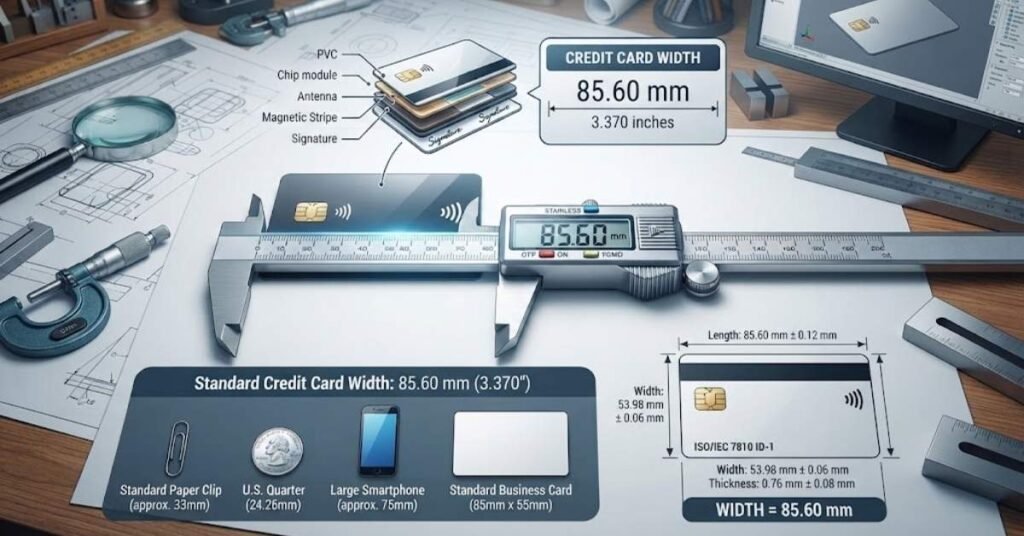
Pull a card from your wallet and turn it sideways.
The short side measures about 5.4 cm, which makes it a solid starting point.
That’s not exactly 6 cm, but it’s close enough for quick size estimation.
Add roughly half a centimeter, about the width of a small fingernail, and you land on target.
Every bank card follows the same standard dimensions.
So you can trust this reference in any country, at any time.
2. Golf Tee
Golfers know the short tee well.
A common one measures about 5.4 cm, and some brands stretch closer to 6 cm.
Here’s a fun way to use it.
Say you’re buying a small gift box online and the listing says 6 cm, so you hold a tee next to your screen and picture the height.
Check the packaging on your tees for the exact length.
Long tees run around 7 cm, so don’t mix them up.
3. Lipstick Tube Cap
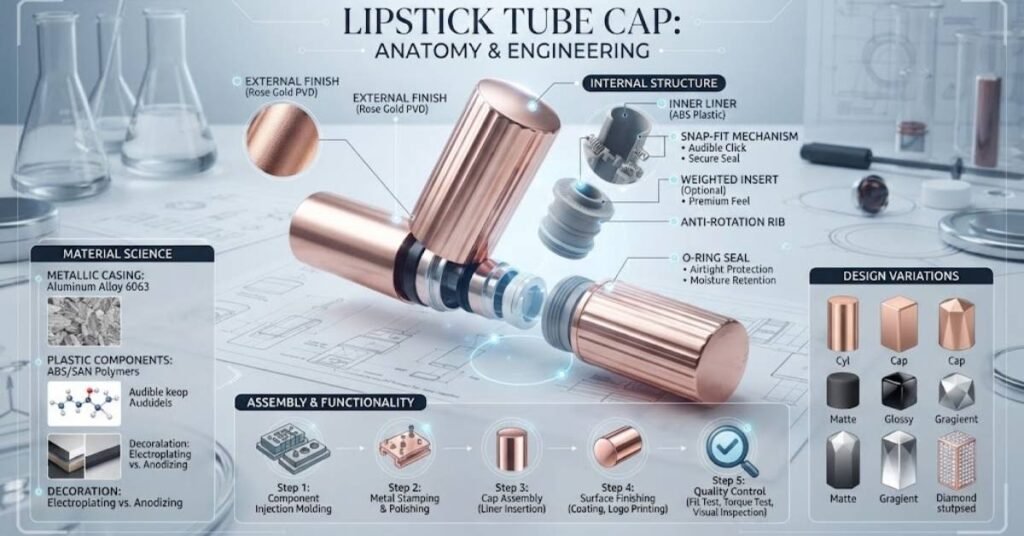
Grab a lipstick tube from your bag and pull off the cap.
Many lipstick tube caps measure between 5 and 6 cm.
The full tube is usually longer, often 7 to 8 cm.
So the cap alone is the better match for 6 cm.
Brands differ, and slim luxury tubes run longer than drugstore ones.
Give yours a quick check against a ruler and you’ll own a handy cosmetics benchmark.
4. Large Paper Clip
A standard paper clip is small, about 3 cm long.
A jumbo paper clip, however, stretches to about 5 cm.
Some office brands go a bit longer.
That puts the large paper clip right in the neighborhood of 6 cm.
Think of the last time you clipped a stack of thick printouts.
That big clip is one of the easiest office supplies to use as a visual comparison.
5. Matchbox Length
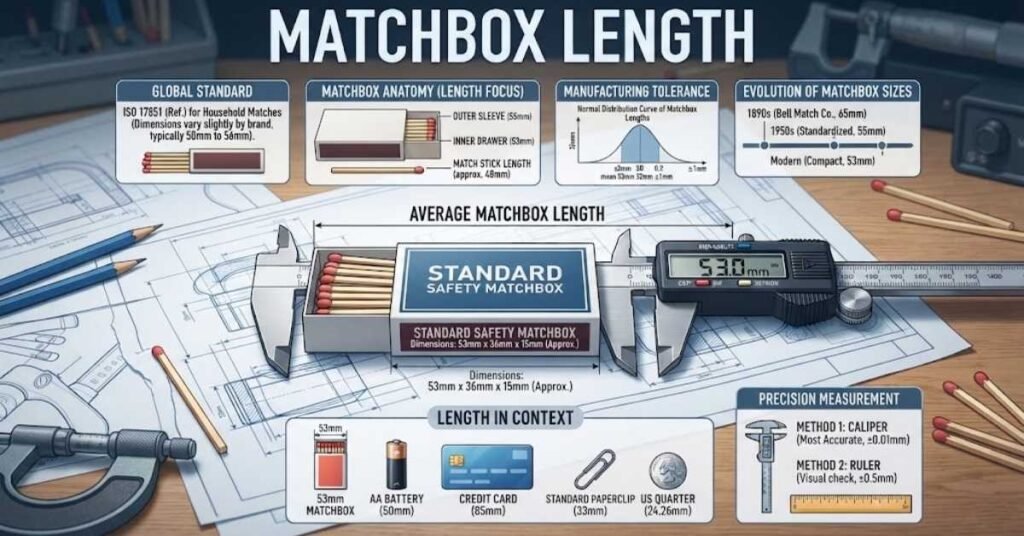
The classic matchbox is a small box with a big role in emergency kits.
Many common types measure around 5 to 6 cm long.
Look at the long side of the box.
That edge gives you a clear picture of 6 cm without any tools.
Campers and hikers keep these in their packs all the time.
So the next time you gear up, you’ll already carry a portable measuring guide.
6. Small Glue Stick
A full-size glue stick is far taller than 6 cm.
Mini and travel versions, however, often stand close to it.
These show up in school bags, pencil cases, and craft supplies.
Kids love them for school projects because they fit small hands.
Sizes vary by brand, so check the label on yours.
Once you know the height, it becomes a desk item you can reuse as a guide.
7. AA Battery Height
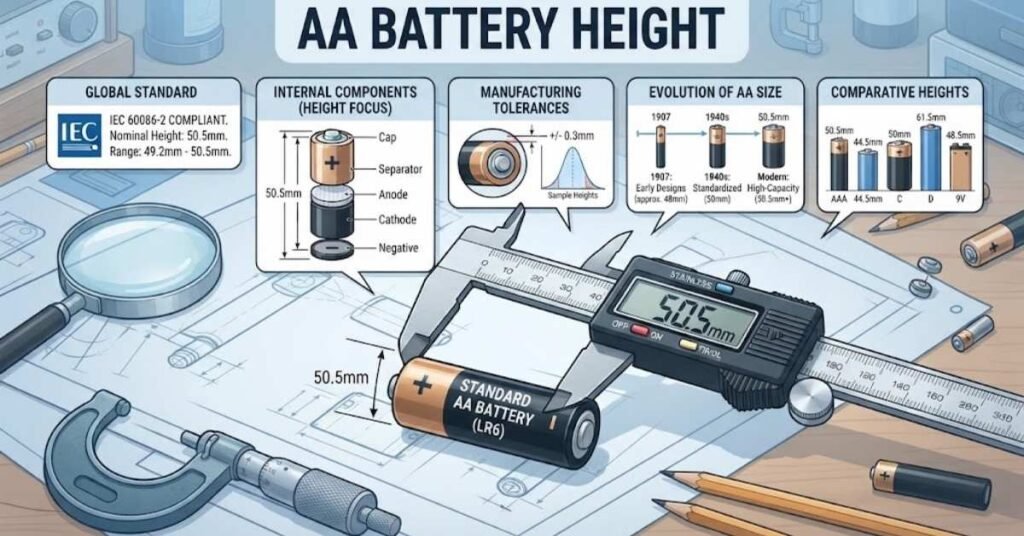
An AA battery is 5.05 cm long.
That’s just under 6 cm, so think of it as a slightly short match.
Here’s an easy way to bridge the gap.
Set the battery down and add the width of your thumb tip, and you reach about 6 cm.
Nearly every home has a few of these in a remote or a desk drawer.
That’s why the AA is a favorite for quick length estimation.
8. Toothpaste Travel Cap
Travel-size toothpaste is a staple in any toiletry bag.
The cap and neck of a compact tube usually take up a few centimeters, and the whole small tube runs longer.
Brands vary, so use this one as a loose guide.
If you own a mini tube, measure the cap section and note how close it gets to 6 cm.
This works well for travel kits and hygiene products.
Once you know your tube, you can compare portable products without a measuring tape.
9. Tea Light Candle Diameter
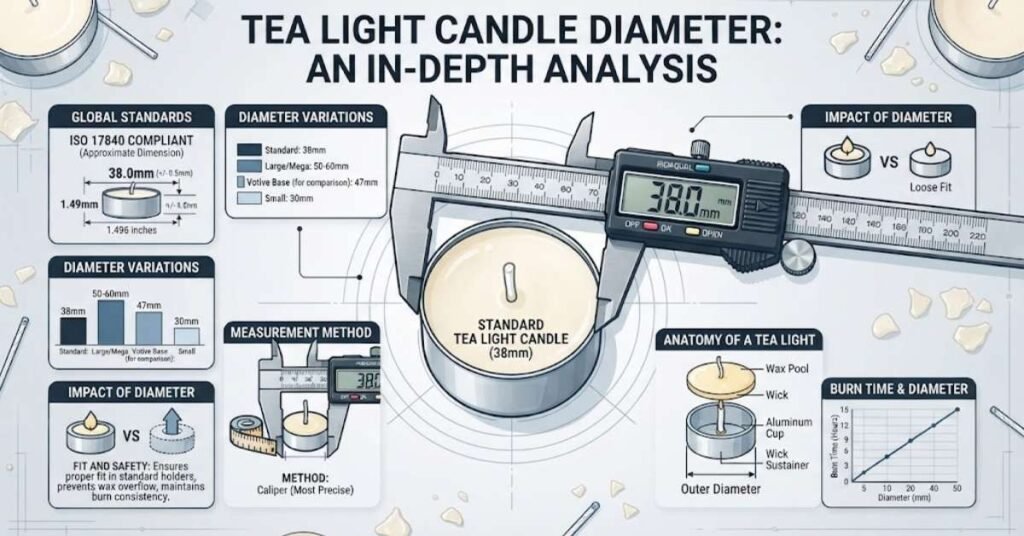
Here’s a detail people often mix up.
The tea light candle itself is about 4 cm wide, and a typical tea light candle holder runs closer to 6 cm across.
Hold a holder in your hand and look at its opening.
That round shape makes a great mental picture of 6 cm.
Use the diameter, not the height, for this comparison.
Candle height varies too much to be a reliable guide.
10. Pocket Comb Width
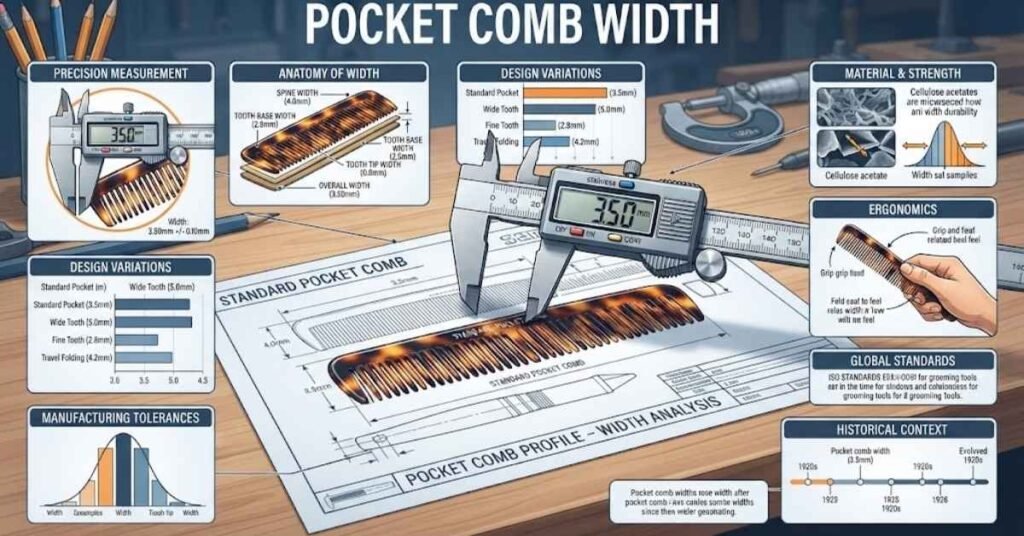
A pocket comb is a personal care essential.
Standard combs are long and thin, but wider or folded models often measure 5 to 7 cm across.
Check the width of yours.
If it’s near 6 cm, you can keep it in a jacket pocket as a permanent size recognition tool.
Folding combs are especially handy.
They tuck into a wallet or a small makeup organizer with room to spare.
6 cm in Inches and Nearby Sizes
Converting is simple.
Divide the centimeters by 2.54, and 6 cm becomes 2.36 inches.
Many people ask if 6 cm is the same as 2 inches.
It’s not, because 2 inches equals 5.08 cm.
Here’s a quick table for measurement conversions from inches to centimeters.
| Inches | Centimeters |
| 2 inches | 5.08 cm |
| 3 inches | 7.62 cm |
| 4 inches | 10.16 cm |
| 5 inches | 12.7 cm |
| 6 inches | 15.24 cm |
| 7 inches | 17.78 cm |
| 16 inches | 40.64 cm |
Wondering how long 16 inches is?
It’s about 40.6 cm, roughly the diagonal of a 16 inch laptop screen.
For smaller steps, remember these points.
2 cm is about 0.8 inches, 3 cm is 1.2, 4 cm is 1.6, and 5 cm is nearly 2 inches.
Why 6 cm Matters for Travel and Daily Life
Small sizes decide what fits and what doesn’t.
A lotion bottle or mini shampoo container around 6 cm slides into a toiletry bag with room to spare.
Travel organizers and pencil cases rely on the same logic.
Knowing the dimensions of your items helps you pack smarter and skip the bulky stuff.
It helps in the kitchen and at home too.
Think of a small container for spices, a coaster, or an eraser that needs the right drawer slot.
Hobbyists use it as well.
Craft items, cords, and compact tools all come in sizes that work best when you can picture the length ahead of time.
Mistakes to Avoid When Estimating 6 cm
Most errors are small, but they add up.
Here are the ones people make most.
- Mixing up units: 6 cm is not 6 inches, since 6 inches is 15.24 cm.
- Trusting brand sizes blindly: Two golf tees or glue sticks can differ by a few millimeters.
- Measuring curves: For round items like a candle holder, use the diameter across the widest point.
- Starting at the wrong mark: Many rulers have a small gap before the zero, so line up the edge correctly.
A little care goes a long way.
Check your estimate against a real ruler whenever accuracy matters.
Conclusion
You now have ten everyday objects and several hand tricks to picture 6 cm quickly.
The playing card, credit card, golf tee, AA battery, and tea light holder all sit close to that size.Next time you need a fast visual estimate, grab one of these instead of hunting for a ruler.
It takes a few seconds and works every time.
Which object surprised you most? Drop a comment below, and share this guide with a friend who’s always guessing sizes.
FAQs
Is 6 cm equal to 2 inches?
No, it isn’t.
2 inches equals 5.08 cm, while 6 cm equals about 2.36 inches.
What does 6 cm look like?
It looks a lot like the width of a standard playing card.
It’s also close to a tea light holder, a golf tee, or the short side of a credit card plus a fingertip.
How many millimeters are in 6 cm?
There are 60 millimeters in 6 cm.
Each centimeter holds 10 millimeters, so just multiply by 10.
Can I estimate 6 cm without a ruler?
Yes, you can.
Use three fingers side by side, two thumb joints, or two and a half US quarters, then check it once against a real ruler.
Is 6 cm considered small?
Yes, it’s a small measurement.
It fits easily in a palm, a pocket, or a pencil case, but it’s big enough to see clearly.

Ethan Whitmore is the editor and administrator of Stylovix, dedicated to making measurements, conversions, sizes, and dimensions simple, accurate, and easy to understand.
