
Ever needed a quick length check and couldn’t find a ruler? You’re not alone.The short answer: 10 centimeters equals 100 millimeters, or about 3.94 inches. Four stacked US quarters, a toilet paper tube, and a 4-inch twist tie all land right around that mark.
This guide gives you 12 everyday objects that are 10 cm long. You’ll also learn how to estimate 10 centimeters without a measuring tape.
How Big Is 10 Centimeters Technically?
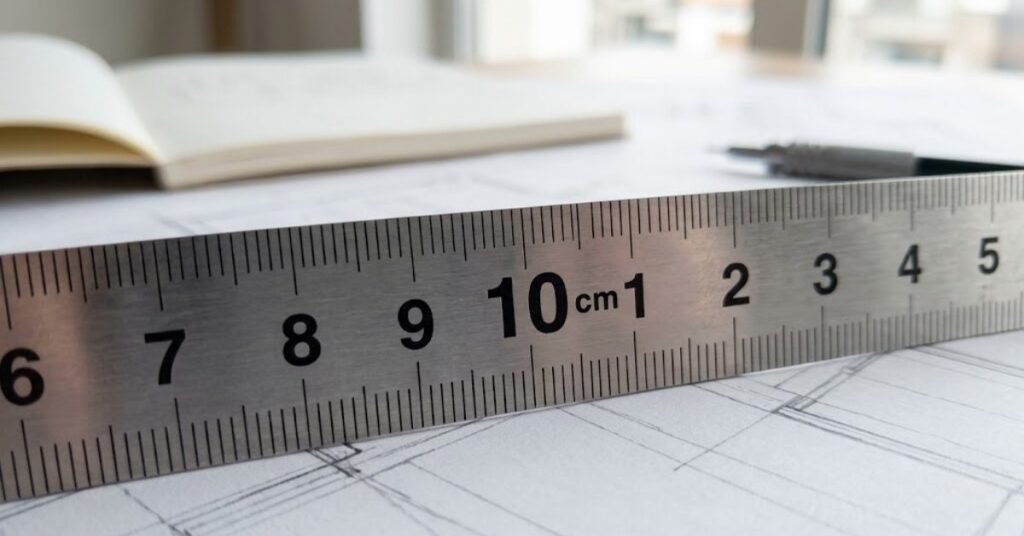
So, how big is 10 centimeters in real terms? It’s a small length, roughly the width of an adult’s palm.
Here’s the technical side. 10 cm equals 100 millimeters (mm) and about 3.94 inches. Most people round it to 4 inches for quick math.
Why does that matter? A 10 cm measurement shows up everywhere, from phone screens to craft projects. Once you can picture it, length estimation gets much easier.
| Unit | Value |
| Centimeters (cm) | 10 |
| Millimeters (mm) | 100 |
| Inches | 3.94 (about 4) |
Think of this as your reference point. Every object below gets compared to it.
1. Four US Quarters
Grab four coins and line them up. That’s one of the neatest 10 cm objects you can find.
A single US quarter has a diameter of 24.26 millimeters. Place four quarters side by side and you get about 97 millimeters.
That’s roughly 9.7 centimeters, so you’re only 3 millimeters short. It’s close enough for a quick measurement when you’re on the go.
Here’s a tip. Coins are standardized, so they make dependable measurement references. Your pocket change works as a mini ruler.
2. Twist Ties
Remember the little wires that close bread bags? Those are twist ties.
Many come cut at about 4 inches, which is almost exactly a 10-centimeter twist tie. Each one is flexible metal wire wrapped in a plastic coating or paper coating.
People use them for securing bags, bundling wires, and tidying cables. They’re also handy in arts and crafts and DIY projects.
Lengths do vary by brand. Check yours before you trust it.
3. Two Credit Cards
Pull out your wallet and stack two cards end to end. You’ve got a decent estimate.
A standard credit card measures about 85.6 by 54 millimeters. That makes the credit card height roughly 5.3 centimeters, or 2.125 inches.
Double that and you get around 10.6 centimeters. It’s slightly over, though still helpful for size comparison.
You can also use business cards the same way. A 3.5 × 2 inch business card gives you a 2-inch width, so five of them side by side reach about 10 inches. That’s too big, so stick with the credit cards here.
4. Paper Clips
Your desk drawer likely hides a 10 cm measurement tool. It’s the humble paper clip.
A small clip runs about 2.5 centimeters. Line up four paper clips and you hit roughly 10 centimeters.
Jumbo clips measure around 4.4 centimeters. Two of those get you near 9 centimeters, which works for a rough guess.
These office supplies are cheap and easy to find. Keep a few in your bag for measuring small spaces.
5. A Standard Wooden Pencil
A new standard wooden pencil is about 19 centimeters long. That’s nearly double our target.
Here’s the trick. Snap your eye to the half pencil length, which sits around 9.5 centimeters. It’s an easy visual shortcut.
You’ll find a wooden pencil with eraser in almost every home. These writing tools and drawing tools make solid practical measurement references.
Sharpened pencils shrink over time. So use a fresh one for accuracy.
6. Pocket Knife
Many compact pocket knives measure close to 10 centimeters when folded. They’re a classic everyday carry item.
Sizes differ a lot between models. Small folding knives often sit between 8 and 11 centimeters.
If yours matches, you’ve got a sturdy reference point in your pocket. Just measure it once with a ruler and remember the number.
Please handle blades safely. Never use an open knife as a measuring stick.
7. Popsicle Stick
Remember those frozen treats from summer? The wooden stick left behind is a handy ruler.
A standard popsicle stick measures about 10 to 12 centimeters. Craft sticks often land near 11 centimeters, though some shorter ones hit 10 exactly.
Kids use them for arts and crafts all the time. Teachers love them for classroom math, too.
Measure your stick before using it. Brands cut them a bit differently.
8. Toilet Paper Roll
Here’s a surprise from the bathroom. The toilet paper roll gives you an easy visual.
The cardboard tube inside is often close to a 10-centimeter toilet paper tube in length. Most rolls are about 10 centimeters wide, or 4 inches.
These restroom essentials are everywhere, so you can check one in seconds. The paper products are also great for crafts after you finish the roll.
Sizes shift with “mega” or “jumbo” versions. Compare a few if you can.
9. Wallet
Your wallet is another everyday carry item worth checking. Pull it out and take a look.
A folded wallet often runs about 10 to 12 centimeters long. Bifold styles sit right in that zone.
Slim cardholders may be shorter. Larger travel wallets can run longer.
Lay yours flat and measure it once. After that, it’s a measurement reference you can trust.
10. Width of a Business Envelope
Mail piles can double as rulers. Grab a standard business envelope.
The common #10 envelope is about 24 centimeters long. Its short side, the envelope width, measures roughly 10.5 centimeters.
That’s close to our 10 cm length. It’s a fine option for visual measurement at home or the office.
Fold it in half the long way, and you’ll see another handy mark. Little tricks like that save you time.
11. Two Golf Tees
Heading to the golf courses soon? Pack a few golf tees for double duty.
Shorter tees measure about 5 centimeters. Two golf tees placed tip to end give you around 10 centimeters.
Standard long tees run closer to 7 centimeters. So check which type you’re holding.
These sporting goods are also common at miniature golf spots. They’re light and easy to carry.
12. Combined Height of Four Hockey Pucks
Now for the fun one. Ice hockey fans will love this.
Each hockey puck has a thickness of 2.54 centimeters, or 1 inch. Stack four hockey pucks and the combined height is about 10.16 centimeters.
Those frozen rubber disks are very uniform, so the math works. It’s a neat stacking objects vertically example.
You won’t always have pucks lying around. Still, it’s a great way to picture the size.
How to Measure 10 cm Without a Ruler
Let’s say you don’t have any of these items. You can still measure 10 cm without a ruler.
Start with your hands. Many adults have a palm width around 8 to 10 centimeters, so test yours once against a ruler. After that, you’ve got a free reference point.
You can also fold a sheet of paper. A US letter page is 21.6 centimeters wide, so folding it in half gets you close to 10.8 centimeters.
Here are more ways to try:
- Align objects side by side, like coins or paper clips.
- Stack objects vertically, such as pucks or books.
- Combine smaller objects to reach the length you need.
- Use coins, cards, or a pencil as quick guides.
10 cm vs 4 Inches: Quick Conversions
People often ask about 10 cm vs 4 inches. They’re very close, but not identical.
10 cm to inches works out to 3.94. 10 cm to mm is exactly 100. That tiny gap of 0.06 inches rarely matters for daily tasks.
For crafts or sewing, though, small gaps add up. If you’re cutting fabric, use a real measuring tape.
Here’s a quick cheat sheet:
- 10 cm = 100 mm
- 10 cm = 3.94 inches
- 5 cm = 1.97 inches (a size for things that are 5 cm long)
- 2 cm = 0.79 inches (a size for things that are 2 cm long)
Why Knowing 10 Centimeters Helps in Daily Life
You might wonder why any of this matters. Picture online shopping, for example.
A listing says a phone case is 10 centimeters wide. If you know what that looks like, you won’t guess wrong. You’ll also catch odd product photos faster.
It helps with DIY projects, too. Picking a screw, cutting a ribbon, or checking a gap all go smoother when you’ve got length estimation skills.
Teachers and parents can use it for lessons. Kids learn measurement faster with common household objects than with abstract numbers.
Tips for Better Accuracy
Not every item is exactly 10 centimeters. Brands, batches, and wear all change real sizes.
So treat these examples as approximate length, not exact. Measure your own item once with a ruler, then label it in your head.
Pair a few items for extra confidence. If four quarters, a toilet paper tube, and a twist tie all agree, you’re probably close.
Keep in mind a few habits:
- Start measuring from the true edge, not a curved corner.
- Use new items since worn ones shrink.
- Check twice, especially on small objects for measuring length.
Conclusion
Things that are 10 centimeters long are all around you. From four US quarters to a toilet paper roll, you’ve got plenty of choices.Now you know how long 10 cm is, how to convert it, and how to estimate it fast. Next timeyou’re without a ruler, you’ll feel ready.
Which object surprised you most? Drop a comment and tell us what you measured. If this helped, share it with a friend who loves handy tricks.We refresh this guide as we find more real-life examples of 10 centimeters, so check back soon.
FAQs
How big is 10 centimeters?
10 centimeters is about 3.94 inches, or roughly the width of an adult’s palm. Most people round it to 4 inches for quick estimates.
How many millimeters are in 10 centimeters?
There are exactly 100 millimeters in 10 centimeters. Each centimeter holds 10 millimeters, so you just multiply by 10.
How many inches is 10 cm?
10 cm equals 3.94 inches. To convert any centimeter value, divide it by 2.54.
What are some everyday objects that are 10 cm long?
Four US quarters side by side, a 4-inch twist tie, and a toilet paper roll all come close. Four stacked hockey pucks also reach about 10.16 centimeters.
How can I measure 10 cm without a ruler?
Line up four US quarters or four small paper clips and you’ll land near 10 centimeters. You can also fold a US letter sheet in half for about 10.8 centimeters.
Is 10 cm the same as 4 inches?
Not quite, but it’s very close. 4 inches equals 10.16 centimeters, so the gap is just 1.6 millimeters. That’s fine for daily tasks, though crafts and sewing call for a real measuring tape.
How accurate are everyday objects as rulers?
Standardized items like coins and hockey pucks are very reliable. Items like wallets, pocket knives, and popsicle sticks vary by brand, so measure yours once with a ruler before you rely on it.
What is a good object for estimating 5 cm or 2 cm?
A short golf tee is about 5 centimeters. A standard paper clip is about 2.5 centimeters, which makes it a decent stand-in for 2 to 3 centimeters.

Ethan Whitmore is the editor and administrator of Stylovix, dedicated to making measurements, conversions, sizes, and dimensions simple, accurate, and easy to understand.
