
Ever held up your fingers and guessed “yeah, that’s about an inch” only to be way off? You’re not alone.
One inch is one of those measurements that sounds simple until someone asks you to point at something that’s exactly that size. Numbers on a ruler don’t always click. But real objects do.
This guide skips the dry conversion chart talk and gets straight to what actually helps: everyday objects you already own or see daily that are almost exactly 1 inch. By the end, you’ll be able to eyeball an inch without ever reaching for a tape measure.
1 Inch, Converted Every Way
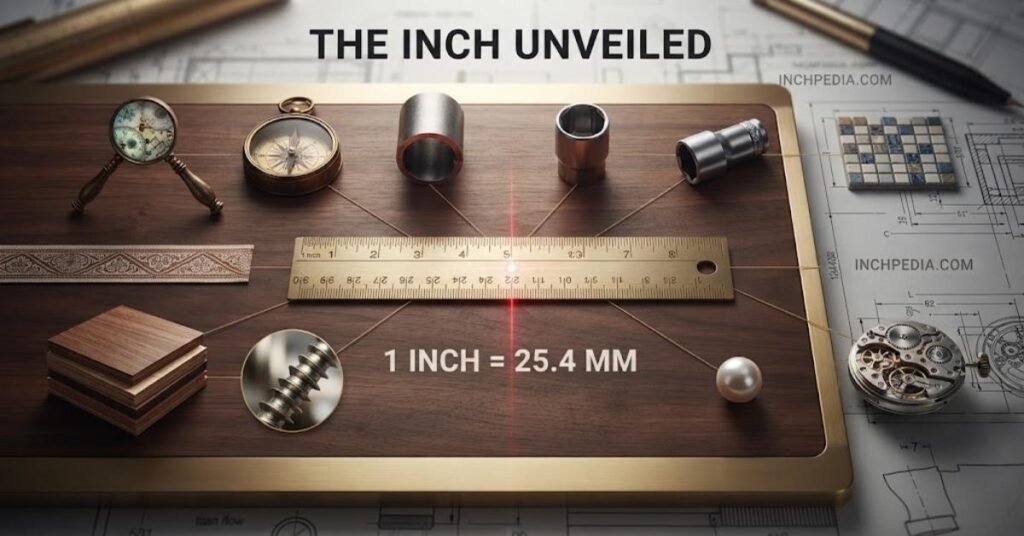
So how does 1 inch stack up against other units of measurement? It’s 2.54 centimeters, 25.4 millimeters, and 0.083 feet. Not numbers you’ll memorize on the spot, but good to have handy.
If you’re switching between imperial units and metric units a lot, here’s the quick version. Inch to cm is times 2.54. Inch to mm is times 25.4. Inch to feet is divide by 12. Inch to meters means dividing by roughly 39.37. Inch to yards works out to dividing by 36.
Screens complicate things further. 1 inch on a screen isn’t a fixed physical size unless you know the DPI, or dots per inch. At 72 DPI, an inch is 72 pixels. At 96 DPI, it’s 96 pixels. Print work often uses 300 DPI, where an inch packs in 300 tiny dots. That’s why a photo can look huge on your phone and tiny once printed.
16 Everyday Things That Land Right Around 1 Inch
Numbers are fine, but your brain remembers pictures better. Here’s a rundown of common objects that are close enough to 1 inch that you can use them as instant visual size guides.
Some of these you’ll have in a drawer right now. Others you’ll spot the next time you’re at a hardware store or a bar. Either way, once you see the comparison, an inch stops being abstract.
Hockey Puck (Top to Bottom)
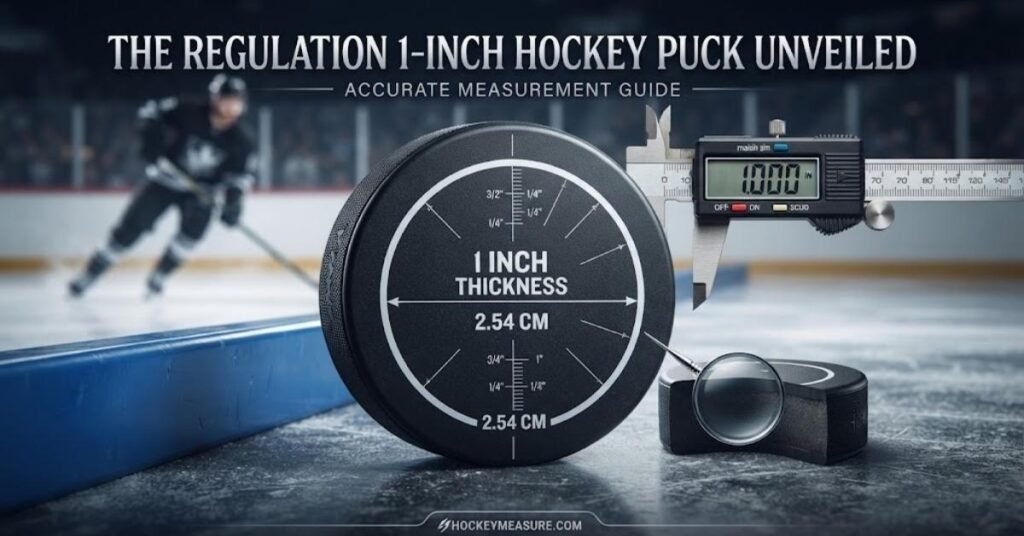
A regulation hockey puck measures exactly 1 inch thick from top to bottom. That’s an official NHL spec, not a rough guess.
If you’ve ever held a frozen hockey puck, you know it feels heavier than it looks. That thickness is baked into the rubber puck design so it slides flat and true on ice.
Next time you’re at a rink or a sports store, pick one up and look at it sideways. That gap between your fingers? That’s your inch measurement, locked in.
A Stack of Pennies
Line up pennies on a table and stack them. Roughly six of them, edge to edge, gets you close to 1 inch in penny thickness stacked together.
The US Mint keeps coin dimensions tight, which makes a coin stack a surprisingly reliable feeler gauge in a pinch. Machinists have used stacked coins for rough measurements for decades.
Try it yourself with spare change. It’s a fun little experiment, and it turns a boring coin jar into a measuring tool.
Standard Wine Cork
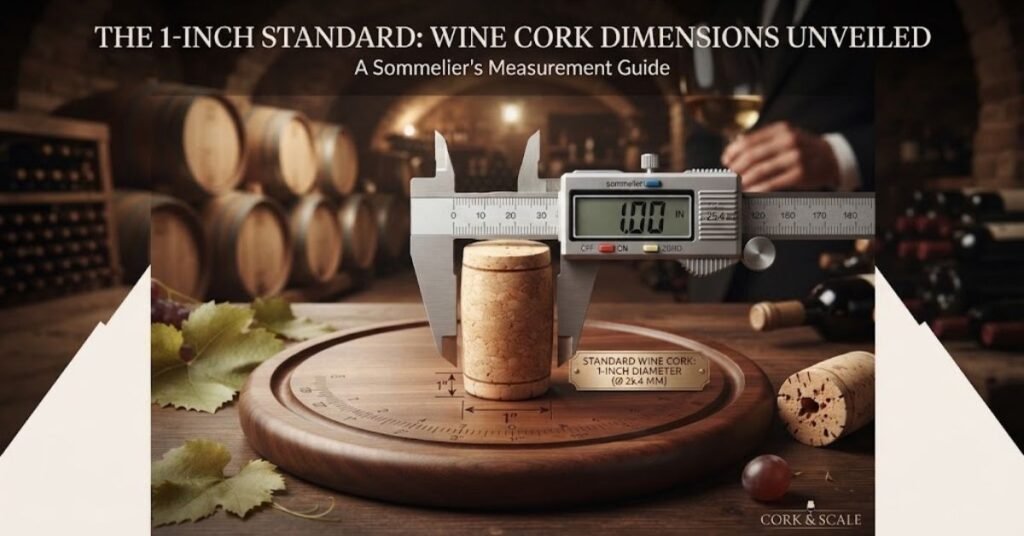
A standard wine cork, often labeled a #9 cork, runs about 1 inch across in diameter. That snug fit is exactly why it seals a bottle neck so well.
Cork diameter varies slightly by brand, but 1 inch is the industry norm for most commercial bottles. Wine makers rely on that consistency to keep bottles airtight for years.
Got a bottle open right now? Pull the cork and eyeball the width. That’s your inch, sitting right there on the counter.
US Dollar Coin
The US dollar coin, sometimes called the golden dollar coin, has a coin diameter just over an inch. It’s noticeably bigger than a quarter coin, which sits closer to 0.95 inches.
People rarely carry these coins anymore, but they still show up in vending machines and collector sets. If you find one, it’s a solid size comparison tool.
Compare it side by side with a quarter sometime. The difference is small, but it’s enough to train your eye for future guesses.
Forever Stamp
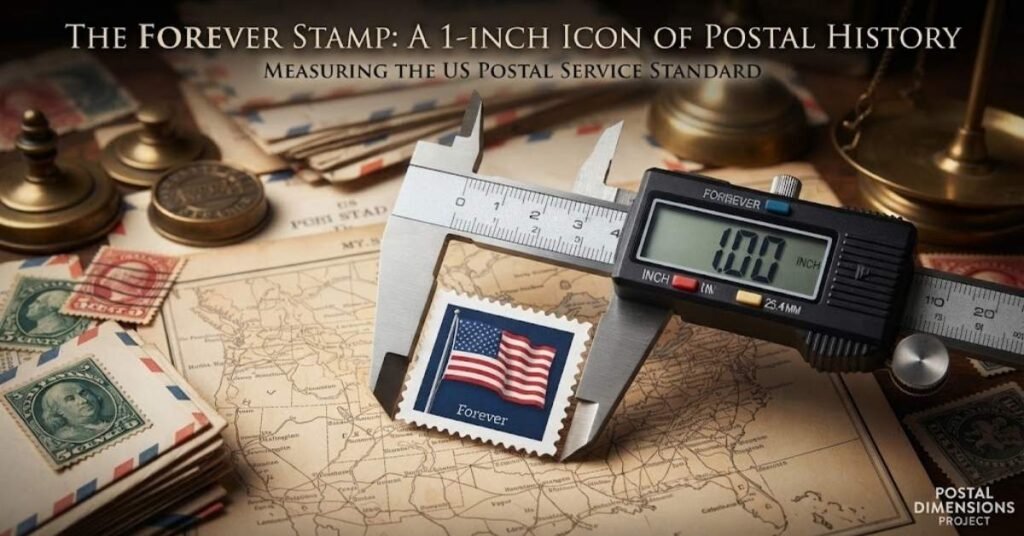
A Forever Stamp is close to an inch on its shorter side, which is no accident. Postal service machines are built around standard stamp sizes for automated mail sorting.
That consistency matters more than you’d think. If stamps varied wildly in size, postal machines would jam constantly trying to process letters.
Grab an envelope from your mail pile and check the stamp. It’s a quick reference you probably didn’t know you had.
SD Memory Card
An SD card, the kind you slide into a camera or laptop, measures about 0.9 inches wide, close enough to count as a real world inch reference. It’s one of the more precise camera accessories you’ll ever measure by hand.
Anyone who’s used a memory card and a card reader knows how small these things are compared to older storage formats. That shrinking size is part of what made portable photography easier.
Dig one out of a drawer and hold it up. It’s smaller than most people expect, and that’s the point.
Shooter Marble
A shooter marble, the big one used to knock smaller marbles in a marble game, typically measures close to 1 inch across. Regular glass marbles are smaller, usually around half that size.
If you grew up playing marbles, you already have a physical memory of this size baked in. It’s one of the more nostalgic size examples on this list.
Find an old marble set in storage and pull out the shooter. That’s your inch, sitting in the palm of your hand.
A 1-Inch Wood Screw
In hardware stores, a 1-inch wood screw is one of the most common sizes sold. It’s a staple for cabinet work, trim work, and light framing jobs.
Contractors and DIYers alike keep a box of these on hand because they fit so many everyday repairs. If you’ve ever built a shelf, you’ve probably used one without noticing the length.
Check your toolbox. There’s a good chance you already own a handful of these exact hardware pieces.
Width of Masking Tape
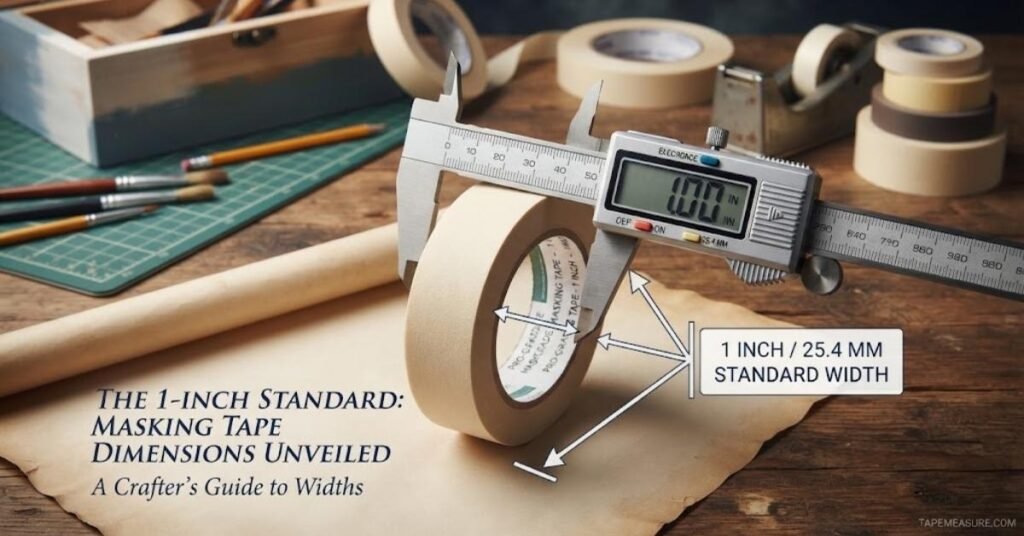
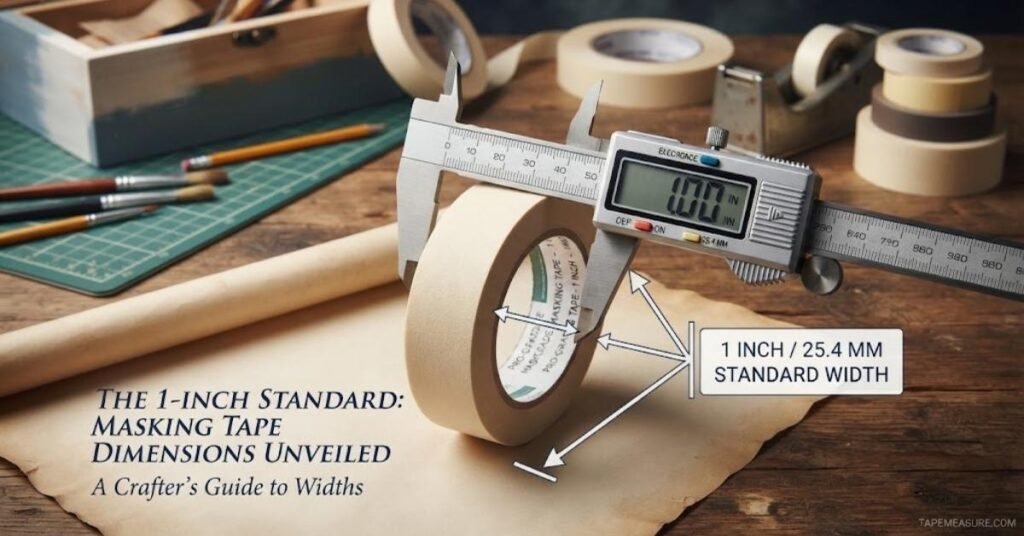
Standard masking tape rolls come in a 1 inch width, making them one of the easiest DIY tools to measure against. Painter’s tape often matches this same tape width for consistency across projects.
Painters and movers use this width constantly because it’s wide enough to hold but thin enough to tear cleanly. It’s a practical size, not a random one.
Grab a roll from under the sink. That strip stretched flat across your palm is a textbook inch.
The Rings on a 1-Inch Binder
A 1-inch binder is named for its ring size, and those binder rings really do open to about an inch across. That capacity holds roughly 200 to 225 paper sheets comfortably.
Anyone who’s organized a school project or work files knows the frustration of picking the wrong binder size. Too small, and pages jam. Too big, and papers slide around loose.
Open a binder near you and measure the ring gap. It’s a genuine, everyday inch measurement most people overlook.
Inch-Wide Ribbon
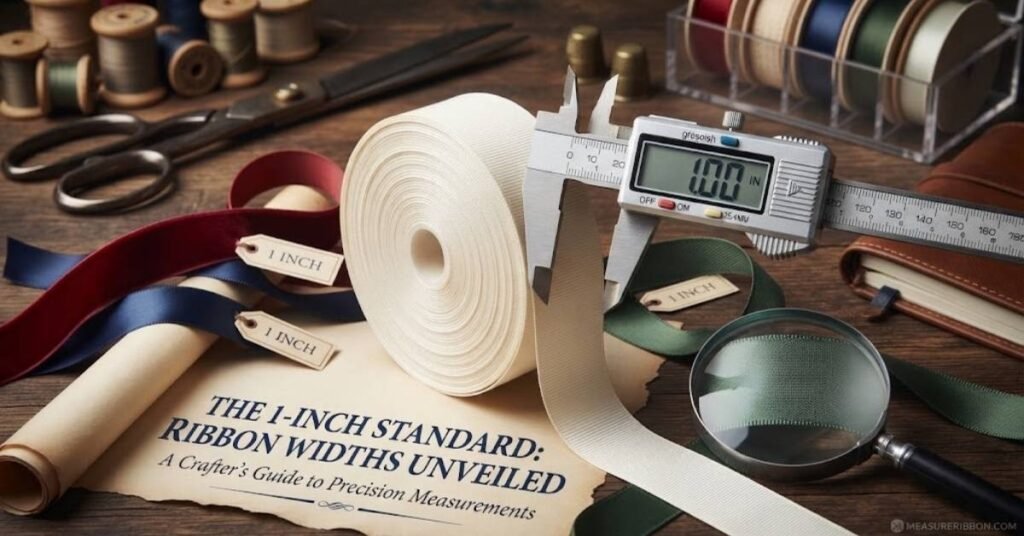
Craft stores sell inch-wide ribbon by the roll, and it’s one of the most popular gift ribbon widths available. Head to any fabric store and you’ll see it labeled right on the spool.
This width works well for bows and wrapping because it’s substantial enough to look nice without overwhelming smaller packages. It’s a design choice, not an accident.
Unspool a bit next time you’re wrapping a gift. That’s an inch, right there in your hands, ready to tie a bow.
Tip of Your Index Finger
From the tip of your index finger to the first knuckle is close to 1 inch for most adults. It’s one of the handiest body measurement tricks because you always have it with you.
Finger measurement tricks like this won’t replace a real ruler for precise work. But for quick estimates around the house, your own hand is genuinely useful.
Measure your own finger against a ruler right now. Once you know your personal number, you’ll have a built in hand measurement tool forever.
1 Inch of Hair
Hair growth averages close to half an inch per month, so 1 inch of hair usually represents about two months of growth. That’s the number most stylists work off during a haircut.
If you’re growing your hair out, understanding this hair length math helps set realistic expectations. It also explains why a small hair trim barely feels noticeable.
Next time you get a trim, ask your stylist how much they’re cutting. Odds are it lines up closely with this monthly average.
A Plump Grape
A plump grape, particularly larger table grape varieties, measures close to 1 inch across. It’s one of the more relatable fruit size comparison examples because you’ve probably eaten one today.
Grape sizes do vary by variety, so this is an approximation rather than an exact science. Still, it’s close enough to be genuinely useful.
Grab a grape from the fridge and roll it between your fingers. That little sphere is roughly your inch for the day.
A Cocktail Ice Cube
A cocktail ice cube, the large square kind bartenders favor, is often cut close to 1 inch per side. Bartender trade knowledge says bigger cubes melt slower, which means less drink dilution over time.
That’s actually the whole reason behind the trend. A smaller cube melts fast and waters down your drink. A 1 inch cube holds its shape and keeps things cold longer.
Next round you order, take a look at the ice. If it’s a big clean cube, you’re staring straight at an inch.
A Small Padlock
A small padlock, the kind used on a gym locker or as a luggage lock, usually has a body width close to 1 inch. Lock width varies by brand, but the compact ones cluster right around this size.
These smaller locks are popular precisely because they’re light enough to carry without adding bulk to a bag. Bigger padlocks exist, but they trade portability for security.
Check your gym bag or garage. If you own a basic padlock, it’s likely sitting right at this inch size.
How to Spot 1 Inch on a Ruler
Reading a ruler or tape measure gets easier once you understand how the marks are divided. A full inch is broken into smaller fractional inch segments, and each one has a purpose.
The half inch mark sits exactly in the middle, usually the second longest line after the whole inch number. The quarter inch marks divide that further, and the eighth inch lines break it down even more.
For fine detail work, you’ll also see sixteenth inch marks, which are the tiniest lines on most standard rulers. Carpenters and machinists read these inch marks constantly, so recognizing the pattern speeds up any project involving a measuring tool.
So What Is “1 Inch of Rain”?
Weather reports toss around 1 inch of rain like everyone understands it, but here’s what it actually means. It means water covering the ground would be 1 inch deep if it didn’t drain, evaporate, or soak in.
That single inch adds up fast in terms of water volume. Over one acre, 1 inch of rainfall depth equals about 27,154 gallons of water. Per square foot, that’s roughly 0.623 gallons, which sounds small until you multiply it across an entire yard.
This is exactly why even modest storm totals can trigger real flooding. A rain gauge measuring just 1 inch doesn’t sound dramatic, but the total water accumulation across a city adds up into millions of gallons within hours.
1 Inch on a Screen
Here’s the part that trips people up. Screen measurement doesn’t work the same way as physical objects, because monitor size and phone screen dimensions depend entirely on resolution settings.
Screen pixels are not a fixed physical unit like centimeters or inches. A pixel conversion only makes sense once you know the DPI of that specific screen, since a laptop, a phone, and a printer all pack pixels differently into the same physical space.
That’s why a logo that looks crisp on your phone might look pixelated when printed. The physical dimensions stay the same, but the pixel density behind them changes everything about how sharp it looks.
Inch Comparisons for Kitchen and Household Items
Beyond the sixteen objects above, a few more kitchen items and household objects deserve a mention for anyone hunting a quick reference.
A standard AA battery is close to 2 inches long, but its diameter lands right around half an inch, useful for comparing smaller items. A US quarter measures just under an inch across, making it a near miss that’s still worth knowing for coins comparisons.
A typical paperclip, unfolded, stretches close to an inch and a half, which makes it a decent stand in when you need something slightly bigger than an inch. These small household items are worth keeping in mind, since chances are one is within arm’s reach right now.
Why Visual Size References Actually Work Better Than Numbers
There’s a real reason visual comparison sticks better than raw numbers. Your brain stores spatial memories differently than it stores abstract figures, which is why “about the size of a hockey puck” lands harder than “one inch thick.”
This is the same logic behind real-life size guides used in construction materials shopping, office supplies planning, and even online furniture listings that show a person standing next to a couch for scale. Object dimensions become meaningful once tied to something familiar.
Next time you need to explain a size to someone without a ruler nearby, skip the numbers entirely. Point to a coin, a screw, or a stamp instead. It’ll land faster every time.
FAQs
How big is 1 inch in cm?
One inch equals 2.54 centimeters exactly, a fixed conversion used worldwide.
What everyday object is closest to 1 inch?
A regulation hockey puck is one of the most precise matches, since its thickness is an official 1 inch by rule.
Is a quarter 1 inch wide?
Not quite. A quarter is just under an inch, closer to 0.955 inches across, while a dollar coin gets nearer to the full inch.
How many pixels are in 1 inch?
It depends on the DPI setting. At 72 DPI it’s 72 pixels, at 96 DPI it’s 96 pixels, and at 300 DPI it’s 300 pixels.
How much water is 1 inch of rain?
Over one acre, 1 inch of rainfall equals roughly 27,154 gallons of water, which is why even small totals can cause flooding.
Does 1 inch of hair grow in a month?
Not quite. Hair grows about half an inch per month on average, so reaching a full inch usually takes close to two months.

Ethan Whitmore is the editor and administrator of Stylovix, dedicated to making measurements, conversions, sizes, and dimensions simple, accurate, and easy to understand.
