
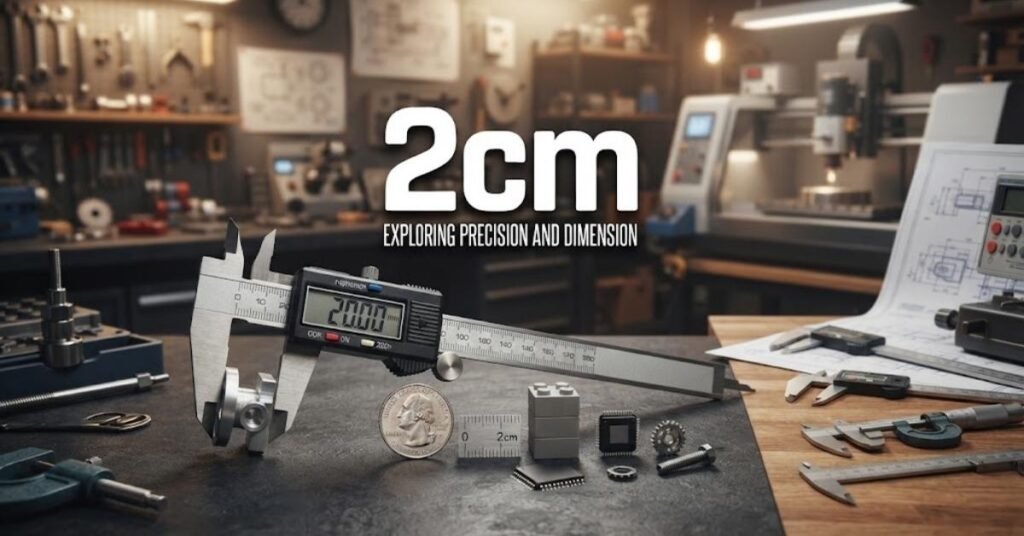
Ever read “2 cm” on a product page and wondered if that’s tiny or totally fine? You’re not alone. Most of us think in inches, or we eyeball it and hope for the best.Here’s the quick answer. 2 cm equals 20 millimeters or about 0.79 inches, so it sits just under 1 inch. Picture a shirt button, two fingernails side by side, or a stack of about 11 quarters.
This guide gives you ten everyday objects to use as a visual reference. You’ll also pick up a few measurement tricks for moments when no ruler is around.
What Is 2 cm in Simple Terms
Think of 2 centimeters as a small measurement, a short length you can cover with two fingertips. It’s about the width of a large grape or a chunky small button.
In metric measurement, it’s 20 mm. In imperial measurement, it’s roughly 0.79 inches, which is a bit more than three quarters of an inch.
You’ll see it on school work, sewing patterns, and gadget specs. Once you can picture it, those numbers stop feeling abstract.
Measurement Without a Ruler
No ruler? No problem. Estimating 2 cm gets easy when you lean on common objects you already own. A reference object in your pocket beats guessing every time.
Try this simple trick. Pick one item from the list below, hold it near what you’re measuring, and compare. That’s visual measurement at its most practical.
Kids pick this up fast, too. Students who practice with everyday references build real measurement skills, and the habit sticks long after the classroom.
Quick Comparison Table
This quick comparison table shows how each object stacks up against 2 cm. Sizes vary by brand, so treat them as close guides, not exact specs.
| Object | Part to Compare | Approximate Size |
| Shirt button | Diameter | 1.5 to 2 cm |
| Paper clips | Two side by side | About 2 cm |
| Jumbo pencils | Two stacked | About 2 cm |
| Quarters | Stack of 11 | About 1.9 cm |
| Block eraser | Thickness | 1 to 2 cm |
| USB ports | Stacked pair | Under 2 cm |
| Drawer key | Head width | About 2 cm |
| Marker cap | Thickness | 1.5 to 2 cm |
| Staple pins | One and two thirds | About 2 cm |
| Bottle cap | Edge height | 1.7 to 2 cm |
Want to double check one? Grab the item, hold a ruler to it, and see how close it lands. You might be surprised.
1. Shirt Button
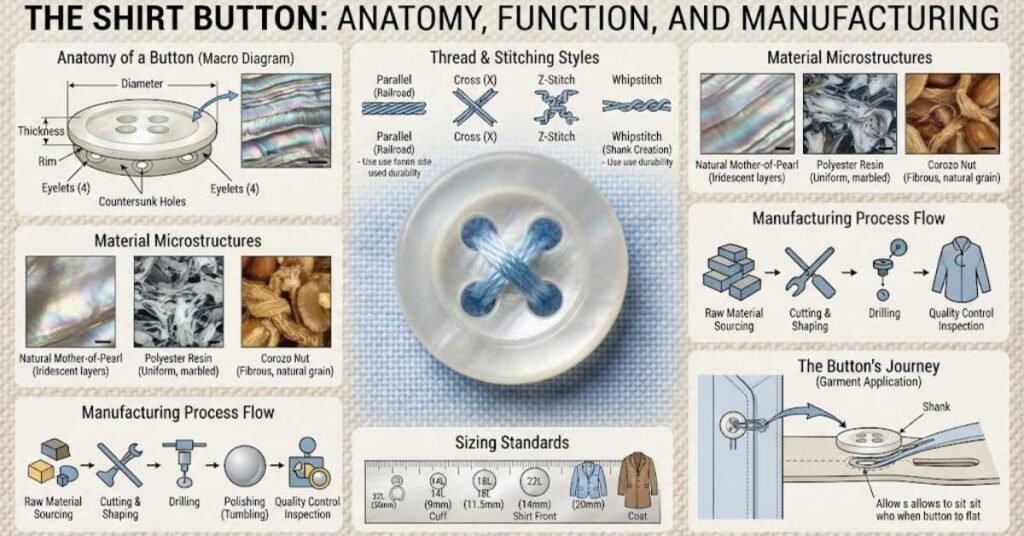
A shirt button is the easiest place to start. Many casual shirts and jackets use buttons near 2 cm across. Dress shirt buttons run smaller, so check yours.
I once matched a replacement button at a tailor’s counter by holding the old one against a ruler. It measured 2 cm exactly, and the swap took two minutes.
For sewing and clothing design, button width matters. It affects button spacing, buttonhole size, and how a fabric panel hangs.
2. Paper Clip Width
A standard paper clip is about 1 cm wide. That makes paper clip width a handy half measure for 2 cm.
Lay two clips side by side and you’ve got roughly 2 cm. It’s a neat trick for office workers who need a quick measurement while organizing papers.
Jumbo clips are wider, so use the standard silver kind for this one. Size differences between brands can add a millimeter or two.
3. Pencil Thickness (Two Stacked)
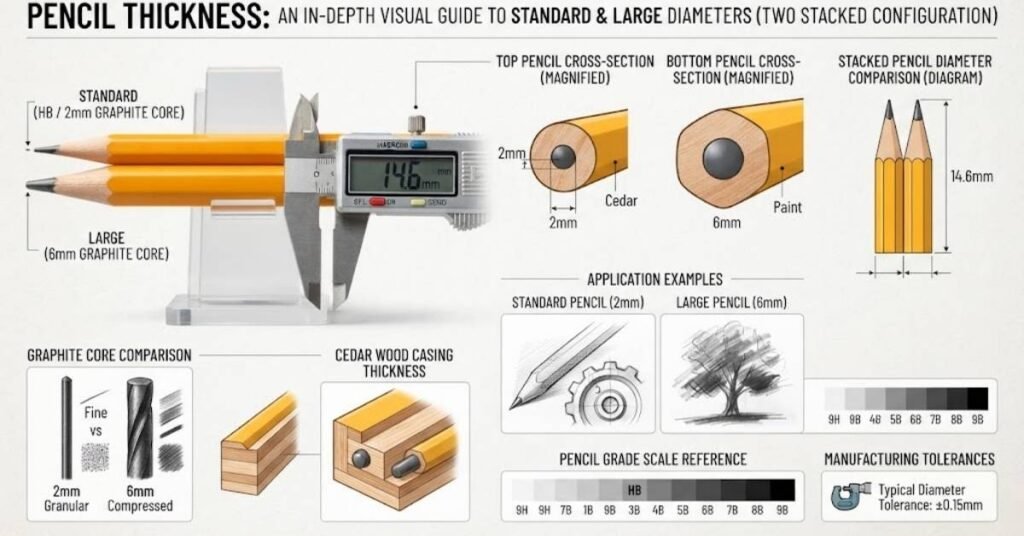
A regular pencil is thinner than most people think, around 7 to 8 mm. Two of them stacked give you only about 1.5 cm.
Jumbo beginner pencils are different. At roughly 1 cm thick, two pencils stacked land right near 2 cm. Kids in early grades use these all the time.
So when you read pencil thickness, check the type first. Stacked pencils make a decent visual comparison, but only if you know which kind you’re holding.
4. Coin Stack Thickness
Coins are perfect for tiny length checks because their size is so consistent. A US quarter is about 1.75 mm thick, so 11 of them make roughly 19 mm.
Add a twelfth and you’re at about 21 mm. That’s a stack you can build in seconds, and it gives you solid coin stack thickness to work with.
Other coin edge sizes work too. A 1 euro coin is around 2.3 mm thick, so about nine of them reach 2 cm.
5. Eraser Thickness
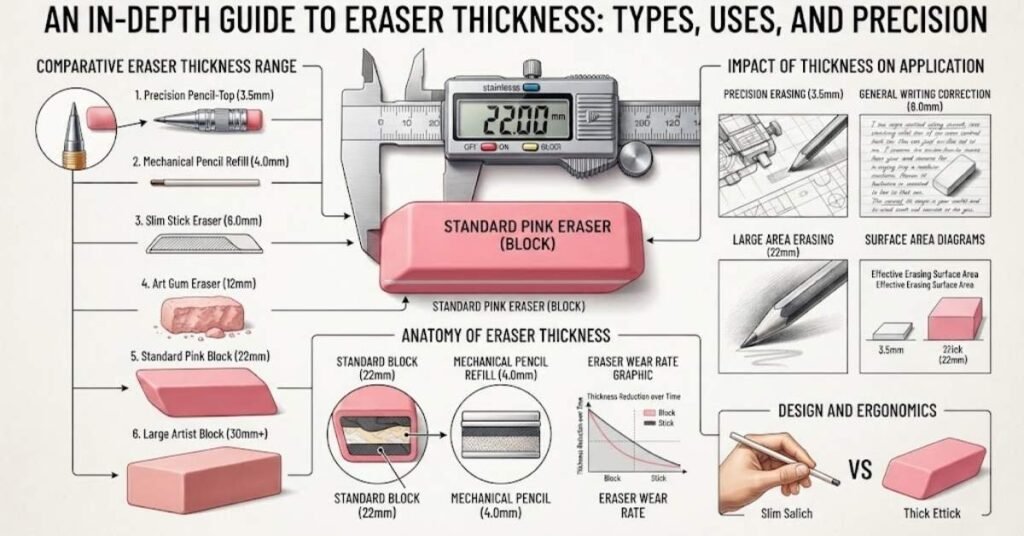
Pull a large block eraser out of a pencil case and check its thickness. Many sit between 1 and 2 cm, which makes eraser thickness a decent small versus large reference.
Pencil top erasers are far thinner, so don’t use those. Look for the chunky white or pink blocks instead.
Artists love these blocks for fine details and clean lifts. They’re also a quick gauge when you need a tiny length in a hurry.
6. USB Port Height
Here’s where people get tripped up. A single USB-A opening is only about 4.5 mm tall and 12 mm wide, so it’s much smaller than 2 cm.
Stacked ports change that. A double-decker USB port block on a laptop or hub often measures a bit under 2 cm tall, which makes USB port height a handy tech clue.
Check your own devices with a ruler before relying on this. Compact design trends mean sizes shift between models.
7. Small Key Width
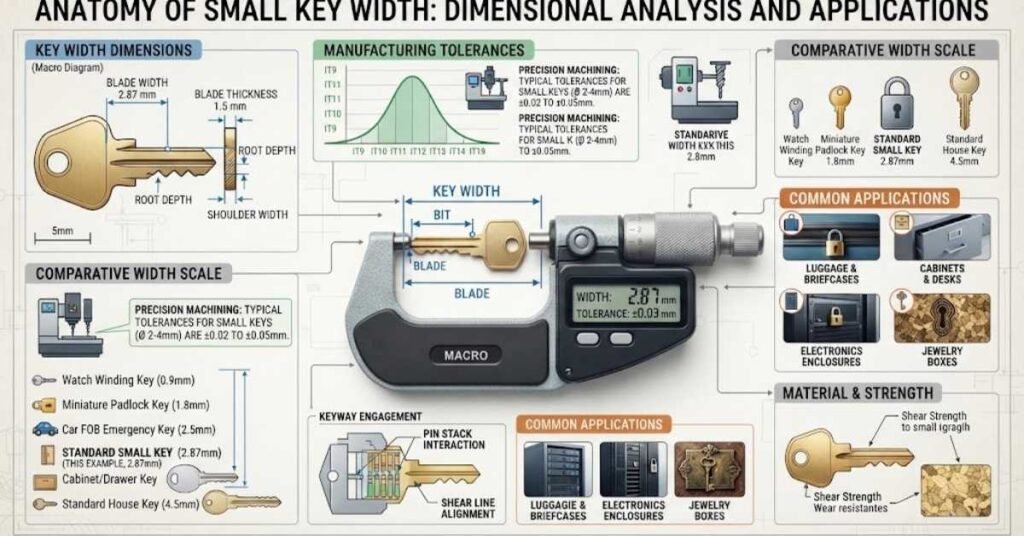
Look at a drawer key or cabinet key and note the head. Many small keys have heads about 2 cm across, which makes key width a useful pocket gauge.
House keys run a bit bigger, often 2.5 cm or more. Pick the little ones from desks and cabinets for this check.
You’ll always have one nearby, and that’s the point. A good reference object is one you don’t have to go find.
8. Marker Cap Thickness
Grab a dry-erase marker and look at the cap. Chunky whiteboard markers often have caps close to 2 cm thick, while slim permanent markers run closer to 1.5 cm.
That makes marker cap thickness a decent visual reference around the classroom and office. Teachers use them for quick scale checks on the board.
Just remember that brands vary. Compare against your own standard pen or marker with a ruler once, then you’ll know.
9. Staple Pin Width
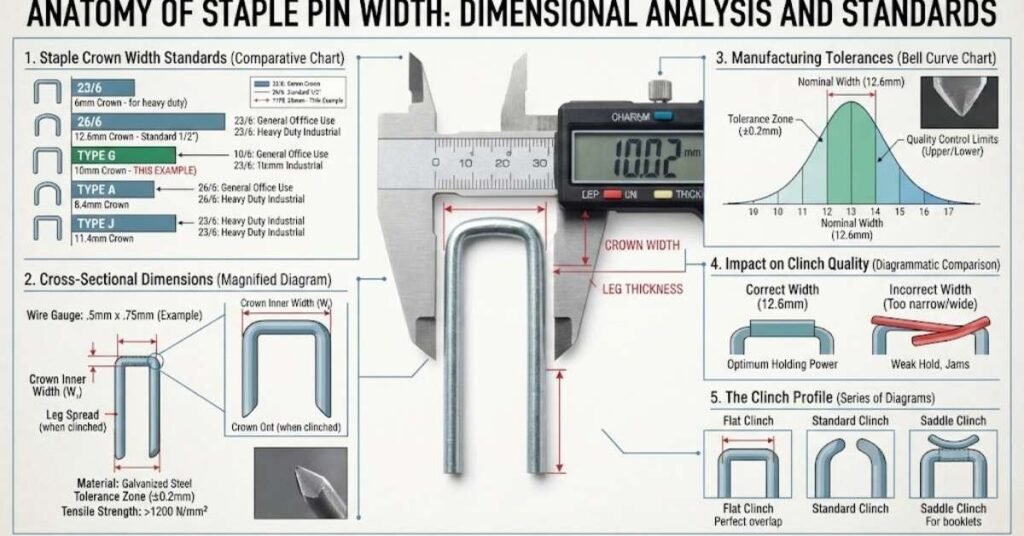
A standard staple is about 1.2 cm across the top. That means staple pin width covers a bit more than half of 2 cm.
Line up one and two thirds of a staple pin and you’ve got your target. Heavy duty staples run wider, so stick with the regular kind.
It’s a small trick, but it works for tiny objects and small gaps on paper projects.
10. Bottle Cap Edge Height
Flip a plastic bottle cap over and measure the edge. Most standard soda and water caps stand between 1.7 and 2.1 cm tall.
That makes bottle cap edge height one of the most common 2 cm references in any kitchen. You’ll find one in nearly every recycling bin.
It’s also an easy one for kids to grab. A free practical example that costs nothing is hard to beat.
2 cm in Inches and Other Conversions
Converting centimeters to inches is simple once you know the number. One inch equals 2.54 cm, so 2 cm in inches is about 0.79.
For centimeters to millimeters, multiply by ten. That’s why 2 cm in mm is 20 mm.
Here are a few larger sizes for scale:
- 2 inches is about 5.1 cm
- 3 inches is about 7.6 cm
- 4 inches is about 10.2 cm
- 5 inches is about 12.7 cm
- 6 inches is about 15.2 cm
- 7 inches is about 17.8 cm
Body Based References You Always Carry
Your hands are built-in rulers. An adult fingernail on a thumb is often close to 1.5 to 2 cm wide, while a pinky finger nail runs closer to 1 cm.
Two pinky fingernails side by side give you about 2 cm. Measure your own once against a ruler and write the number down.
This is measuring without tools at its simplest. Everyone’s hands differ, so test yours first and trust the result.
Where 2 cm Shows Up in Real Life
In sewing and crafting, 2 cm is a common spacing gap for stitches, pleats, and seam allowances. Knowing the size by sight saves you from constant ruler checks.
At school, kids learning measurement use it for line drawing and map scales. In the office, it shows up in margins, labels, and binding gaps.
Around the house, it’s the gap behind a shelf or the depth of a thin drawer. Household measurement often comes down to a couple of centimeters.
Tips for an Accurate Measurement
Always measure from the true edge of the object. A tiny slip at the start adds up fast on a short length.
Keep your eye directly above the ruler to avoid angle errors. Check your reference object against a ruler at least once, since sizes shift between brands.
For anything that needs accurate measurement, like fabric or furniture, use a real tool. These tricks work best for quick checks and rough planning.
Conclusion
So now you know what 2 cm really looks like. It’s 20 millimeters, about 0.79 inches, and roughly the size of a shirt button, a bottle cap edge, or a stack of coins.Use these everyday items as your go-to references and measuring gets a lot easier.
Which one worked best for you? Drop a comment below and tell us.If this helped, share it with a friend who’s always hunting for a ruler. We’ll keep this guide fresh as sizes and products change.
FAQs
How long is 2 cm in inches?
2 cm is about 0.79 inches. That’s a little less than 1 inch, or just over three quarters of an inch.
What does 2 cm look like?
It looks like a shirt button, the width of two pinky fingernails, or a stack of about 11 quarters.
How can I measure 2 cm without a ruler?
Use a reference object like a coin stack, a jumbo pencil pair, or a bottle cap edge. Check it against a ruler once so you can trust it.
Is 2 cm big or small?
It’s small. At 20 mm, it’s best for fine details, small spaces, and tiny objects, but too short for most daily distance needs.

Ethan Whitmore is the editor and administrator of Stylovix, dedicated to making measurements, conversions, sizes, and dimensions simple, accurate, and easy to understand.
