
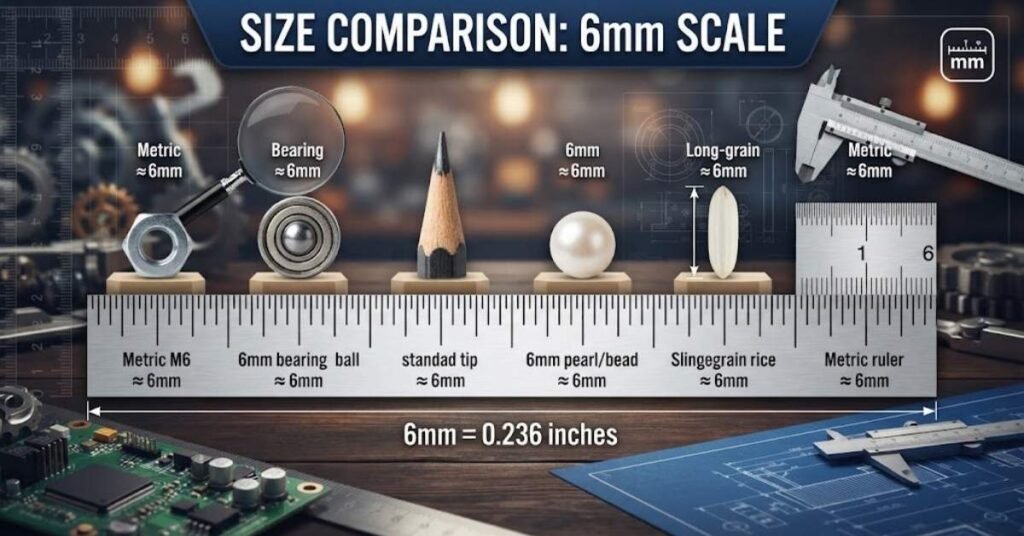
Ever tried to picture how small 6mm actually is without grabbing a ruler? You’re not alone. A lot of us hear a measurement like this and just nod along, even though we have no real picture in our heads.
This guide fixes that by walking you through nine everyday objects that are roughly 6mm in size, so you can finally visualize it without any guesswork.
How Big Is 6mm?
6mm equals 0.6 cm, or 0.006 m if you want to go the metric route. In inches, it comes out to about 0.236 inches, which people often round to a quarter of an inch. That’s a tiny distance, smaller than the width of most fingernails.
Think of it this way. If you split one inch into four equal parts, 6mm lands just a touch under one of those parts. It’s small enough to slip between your fingers without you even noticing it’s there.
This kind of precise measurement matters more than you’d think. Whether you’re shopping for jewelry, fixing a loose screw, or working on a school craft project, knowing what 6mm looks like saves you from ordering the wrong size online.
Quick Comparison Table
Sometimes a table says more than a paragraph ever could. Here’s a fast size comparison so you can see where 6mm sits next to other familiar measurements.
| Object | Approx. Size | In Inches |
| Green pea | 6mm | 0.24 in |
| Pencil eraser | 6mm to 7mm | 0.24 to 0.28 in |
| Small pearl bead | 6mm | 0.24 in |
| Drinking straw opening | 6mm | 0.24 in |
| Small button | 6mm | 0.24 in |
| Earphone cable | 5mm to 6mm | 0.20 to 0.24 in |
| Screw head (M3 to M4) | 6mm | 0.24 in |
| Craft foam sheet | 6mm thick | 0.24 in |
| Mini marble | 6mm to 8mm | 0.24 to 0.31 in |
Keep this table bookmarked. It works as a handy conversion chart the next time you need a quick visual measurement on the fly.
How to Measure 6mm Without a Ruler
You don’t always have a ruler handy, and that’s okay. There are a few low tech tricks that get you close enough for everyday tasks.
Using Your Fingers
Your fingernail width is a surprisingly good guide. Most adult fingernails measure somewhere between 10mm and 15mm across, so 6mm is roughly half that width.
Look at the tip of your pinky finger instead. The narrowest part often lands close to 6mm, which makes it a decent backup reference when nothing else is around.
Using Common Objects
Everyday items double as measuring tools in a pinch. A green pea, a small pearl bead, or the tip of a pencil eraser all hover right around 6mm.
Grab whatever’s closest on your desk or in your kitchen. Comparing an unknown object side by side with one of these gives you a fast approximate size without any math involved.
Using Coins or Cards
Coins carry standardized dimensions, which makes them reliable. The thickness of a stack of a few thin cards, like credit cards, can also approximate 6mm when layered together.
This trick works well for DIY projects where precision counts but a ruler isn’t within reach. It’s not perfect, but it gets you close enough to move forward with confidence.
1. Green Pea

A fresh green pea is one of the most relatable everyday comparison points out there. Most peas measure somewhere between 5mm and 8mm, with plenty landing right at 6mm.
Next time you’re cooking dinner, glance at a spoonful of peas before you toss them in the pot. That little green sphere rolling around your kitchen counter is basically a living size reference for this exact measurement.
2. Pencil Eraser Width
The pink eraser on the end of a standard pencil is another solid real-life comparison. Most erasers measure close to 6mm to 7mm across, especially the type found on classic yellow pencils.
Mechanical pencil erasers run a bit smaller, but they still land in a similar range. Next time you’re doodling at your desk, take a second to notice just how compact that eraser tip really is.
3. Small Pearl Bead
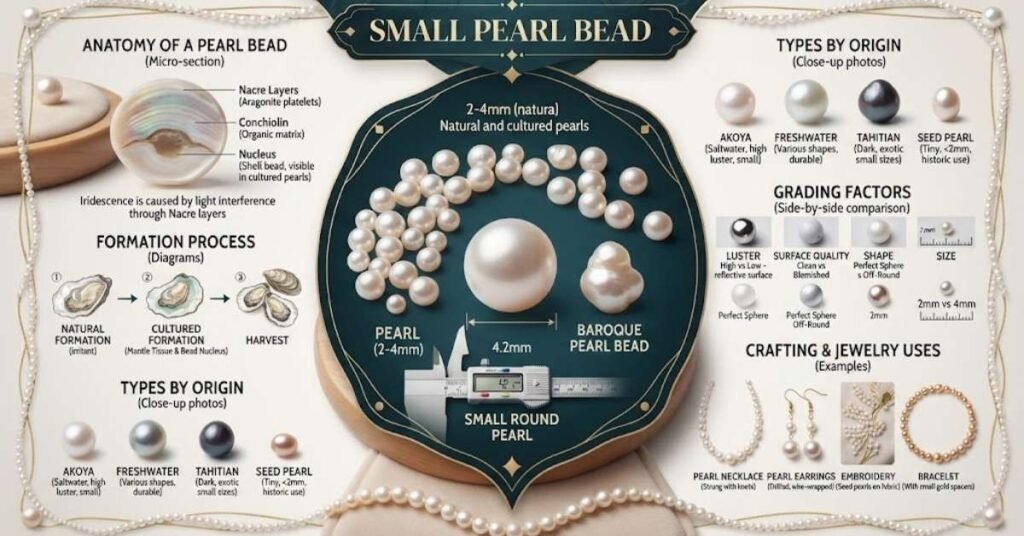
Anyone who’s browsed jewelry supplies knows pearl beads come in a wide range of sizes. The small pearl bead size, often used in delicate pearl earrings and layered bracelets, typically measures around 6mm in diameter.
Jewelry makers love this particular size because it strikes a nice balance. It’s noticeable enough to catch light and attention, yet subtle enough not to overwhelm a design, which is why it shows up so often in DIY jewelry kits.
4. Standard Drinking Straw Width
Ever wonder why some straws feel narrower than others? The straw opening on a typical drinking straw measures close to 6mm in width, at least for the classic kind you’d get with a soda.
Boba and smoothie straws are noticeably wider, sometimes double that size. So if you’ve ever struggled to sip a thick milkshake through a regular straw, now you know the 6mm opening is probably to blame.
5. Small Button Thickness
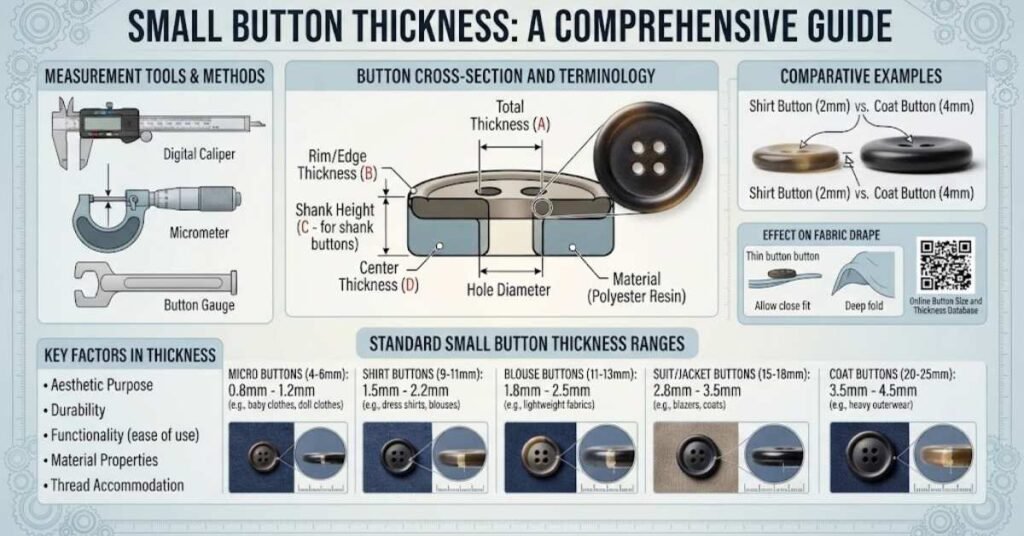
Buttons come in all shapes, but the small ones found on baby clothing and delicate dress shirt cuffs often measure right around 6mm across. These tiny fasteners need to be sturdy without adding bulk to soft, lightweight fabric.
Sewing enthusiasts and tailoring professionals keep a stash of these small buttons for detail work. If you’ve ever struggled to push a thread through a button hole this small, you already have a feel for just how tight that space really is.
6. Earphone Cable Diameter
Take a close look at the wire on your earphone cable sometime. Many standard cables measure somewhere between 5mm and 6mm across, especially braided or reinforced versions used in gaming headset wires.
Thicker charging cable designs can push closer to this range too, particularly ones built with extra insulation for durability. That extra bulk isn’t just for show. It protects the wires inside from everyday wear and tear.
7. Small Screw Head
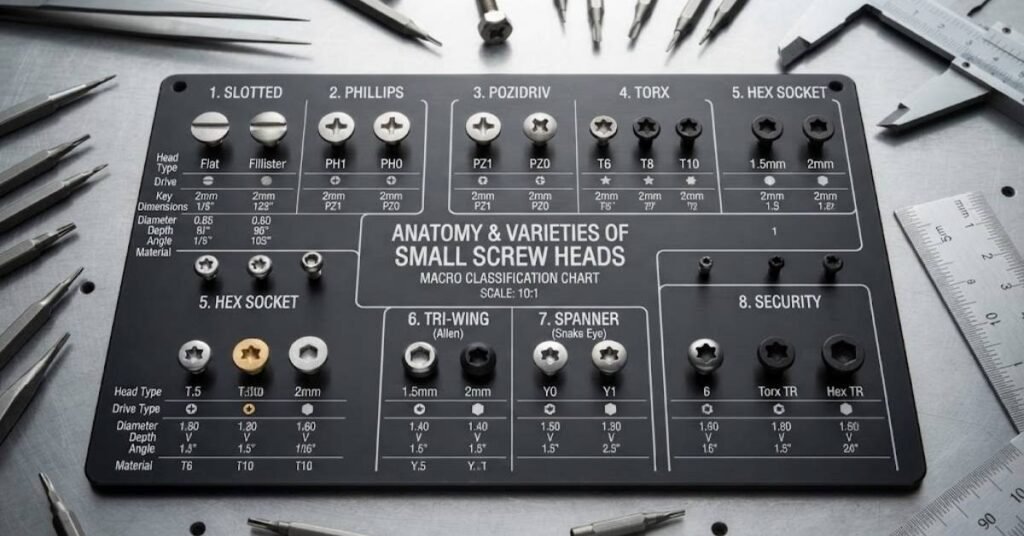
If you’ve ever assembled furniture, you’ve handled a screw with a head around 6mm across. This size typically pairs with M3 to M4 screws, common in furniture hardware, electronics hardware, and general home repair kits.
Builders and DIY folks rely on drill bits matched precisely to this screw head size. Get the size wrong, and you risk stripping the head or damaging whatever you’re trying to fasten together.
8. Craft Foam Thickness
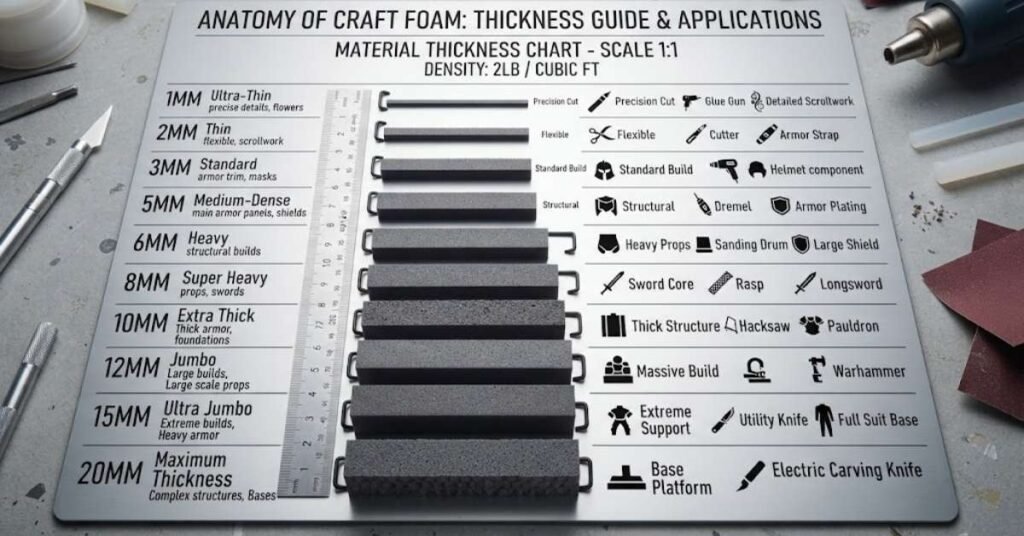
Walk into any craft store and you’ll find foam sheets in a range of thicknesses. The thicker craft foam option, often used for costume designs and dimensional school projects, measures close to 6mm.
This thickness gives enough structure to hold a shape on its own. That’s exactly why it’s a favorite for DIY crafts like masks, signs, and layered decorations that need to stand up straight.
9. Tiny Marble
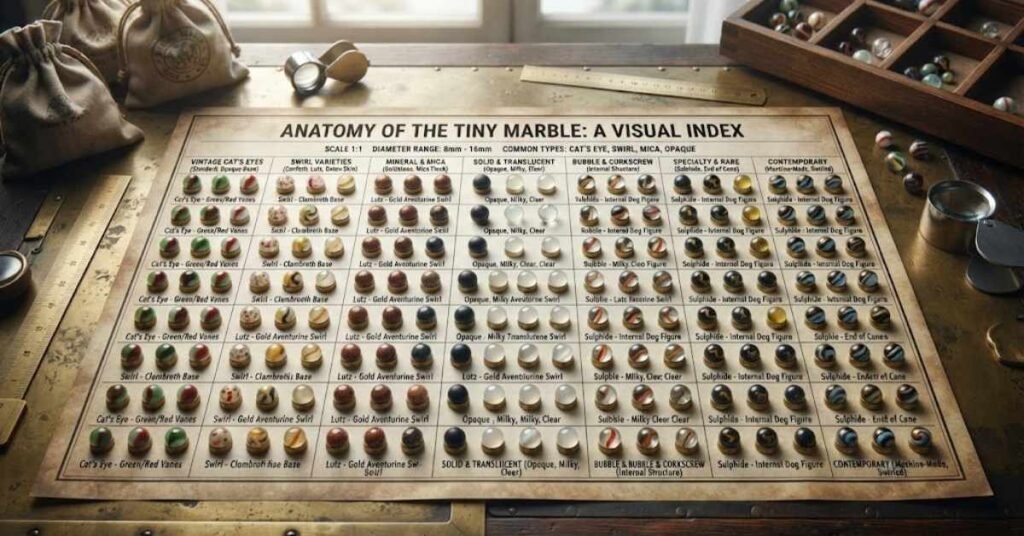
Classic marbles usually measure around 16mm, but mini versions tell a different story. Mini marble and toy marble sets made for younger kids often include tiny pieces closer to 6mm to 8mm across.
These smaller marbles show up in sensory bins, mosaic art, and simple counting games. Their compact size makes them easy for little hands to grip, though they do require some adult supervision given how small they are.
Why Knowing 6mm Matters in Real Life
This isn’t just trivia for the sake of it. Shopping online for accessories, jewelry stones, or electronic parts gets a lot easier once you can picture exact dimensions instead of guessing.
Think about how often a listing gives you a number with zero context. Knowing that 6mm is roughly a green pea or a pencil eraser turns an abstract figure into something you can actually picture before you click buy.
Precision also matters for safety and function, not just looks. A screw that’s slightly off in size, or a drill bit that doesn’t match, can wreck an entire home project in seconds.
6mm vs Other Common Measurements
Context helps a measurement stick in your memory. 2mm is roughly the thickness of a credit card, while 3mm sits close to a standard pencil lead.
5mm is just a hair smaller than 6mm, similar to a small grain of rice or a tiny bead. Jump up to 10mm, and you’re looking at something closer to a standard marble or a large shirt button.
Seeing these side by side makes the whole millimeter to inch conversion feel less abstract. Once you’ve anchored 6mm to something familiar, spotting the difference between it and nearby measurements gets a lot easier.
Conclusion
6mm might sound like an oddly specific number, but it’s all around you. From the green pea on your dinner plate to the screw holding your bookshelf together, this tiny measurement shows up more often than most people realize.
Hopefully these everyday objects gave you a clear visual reference you can actually picture the next time a number like this pops up. Got a favorite 6mm comparison we missed? Drop it in the comments below, and feel free to share this guide with anyone who’s ever squinted at a tiny measurement and wondered what it really looks like.
FAQs
How big is 6mm in inches?
6mm converts to roughly 0.236 inches, which most people round to about a quarter of an inch. It’s a small but noticeable width, similar to the tip of a pencil eraser.
What does 6mm look like?
Picture a green pea or a small pearl bead sitting in your palm. That rounded, compact size is a good mental snapshot of what 6mm actually looks like in real life.
Is 6mm considered small?
Yes, 6mm falls firmly into the small end of everyday measurements. It’s larger than a grain of rice but noticeably smaller than a standard button or coin.
How can I measure 6mm without a ruler?
Compare it against your fingernail width, a green pea, or a stack of thin cards. None of these methods are perfectly precise, but they get you close enough for most everyday DIY projects.
What items are usually 6mm wide?
Common examples include a pencil eraser, a small pearl bead, a screw head, and the straw opening on a standard drinking straw. Craft foam sheets and mini marbles also commonly fall right around this size.

Ethan Whitmore is the editor and administrator of Stylovix, dedicated to making measurements, conversions, sizes, and dimensions simple, accurate, and easy to understand.
