
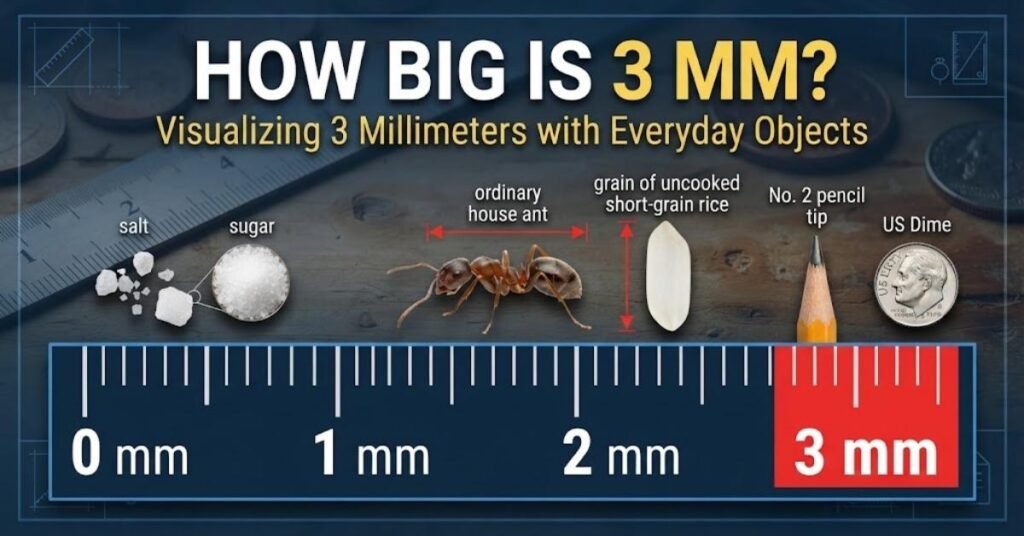
You picked up a product listing and it said “3mm.” Now you’re stuck. Is that tiny? Is that big enough for your project? Most people have no clue what 3mm actually looks like until they see it next to something they know.
That’s exactly what this guide fixes. No rulers, no guesswork, just real objects you’ve touched before.
Table of Contents
- How Big Is 3mm?
- How to Estimate 3mm Without a Ruler
- Quick Comparison Table
- 9 Everyday Things That Are 3mm
- FAQs
- Conclusion
How Big Is 3mm?
Three millimeters is a small measurement, smaller than most people picture in their head. In the metric system, it equals 0.3 centimeters or 0.003 meters. If you think in inches, it’s roughly 0.118 inches, just under one-eighth of an inch.
Put another way, 3mm is about half the width of a standard pencil. It’s the kind of thickness measurement that shows up in jewelry making, electronics repair, and craft supplies. You won’t notice it from across a room, but you’ll definitely notice it if a screw doesn’t fit or a bead won’t thread properly.
This is why a solid size comparison matters. Numbers on a screen don’t mean much until you connect them to something physical.
How to Estimate 3mm Without a Ruler
Here’s the good news. You don’t need a measuring tool sitting on your desk to guess tiny measurements like this one. Your body and your junk drawer already have what you need.
Below are three quick tricks people use every day for measuring without tools. Pick whichever fits your situation, and you’ll get a solid approximate size in seconds.
Using Your Fingernail
Look at your pinky fingernail. The width of the little fingernail edge, the thin sliver right at the tip, sits close to 3mm. Not the whole nail, just that narrow strip near the edge.
This trick works great for quick checks while shopping or crafting. It’s not exact, but it’s fast, and honestly, it’s fast enough for most everyday jobs.
Using Coins or Cards
Grab a credit card. The thickness of three stacked credit cards lands right around 3mm. This is one of the most reliable fingertip comparison tricks out there because cards are standardized, unlike fingers.
If you’re at a store or workshop, this practical comparison method beats trying to remember what a millimeter “feels like.” Stack, glance, done.
Using Everyday Objects
Coarse salt crystals, small beads, and pencil tips all hover near this size. Keep a few of these nearby, and you’ve basically built yourself a free visual reference kit.
Once your brain locks onto one of these objects, guessing similar sizes gets a lot easier. This is visual estimation at its simplest, no math required.
Quick Comparison Table
| Object | Approx. Size | Category |
|---|---|---|
| Black peppercorn | 3mm | Kitchen ingredient |
| Small jewelry bead | 3mm | Craft supplies |
| Thick pencil tip | 3mm | Drawing tools |
| Tiny screw width | 3mm | Hardware parts |
| Small seed bead | 3mm | Jewelry making |
| Earbud cable | 3mm | Electronics accessories |
| Coarse salt crystal | 3mm | Kitchen ingredient |
| Thin plastic sheet | 3mm | Packaging material |
| Watch screw head | 3mm | Precision tools |
This conversion chart style table gives you a fast object comparison without scrolling through paragraphs. Bookmark it if you shop online often.
1. Black Peppercorn
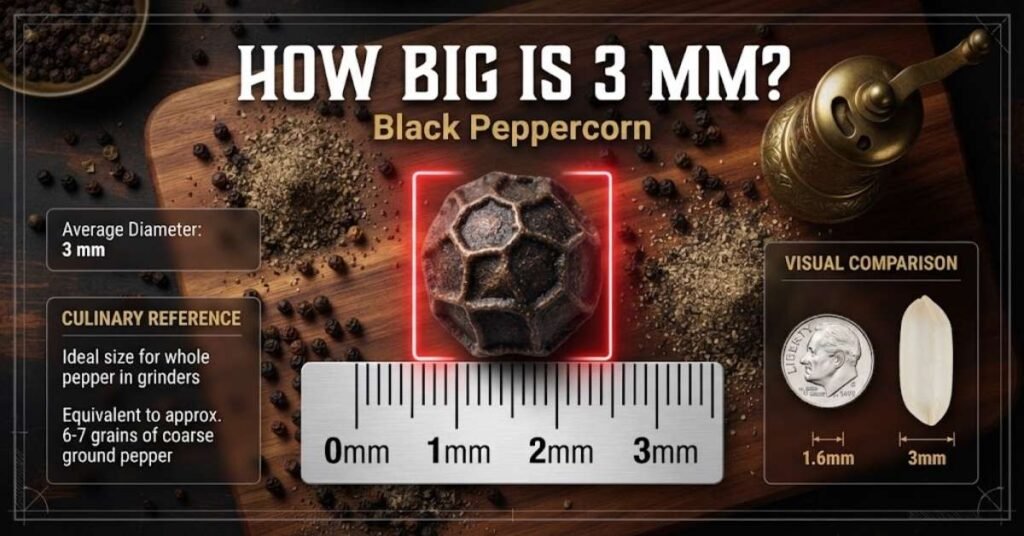
Grab a black peppercorn from your spice rack and take a real look at it. Most whole peppercorns measure close to 3mm across, making this kitchen ingredient one of the easiest real-world examples around.
Cooks reach for peppercorns daily, which means almost everyone already owns a perfect size reference without realizing it. Next time a recipe calls for cracked pepper, notice the size before you grind it.
It’s a small thing, literally, but it’s a genuinely useful trick when you’re trying to explain small measurement ideas to someone else. “About the size of a peppercorn” clicks instantly for most people.
2. Small Jewelry Bead
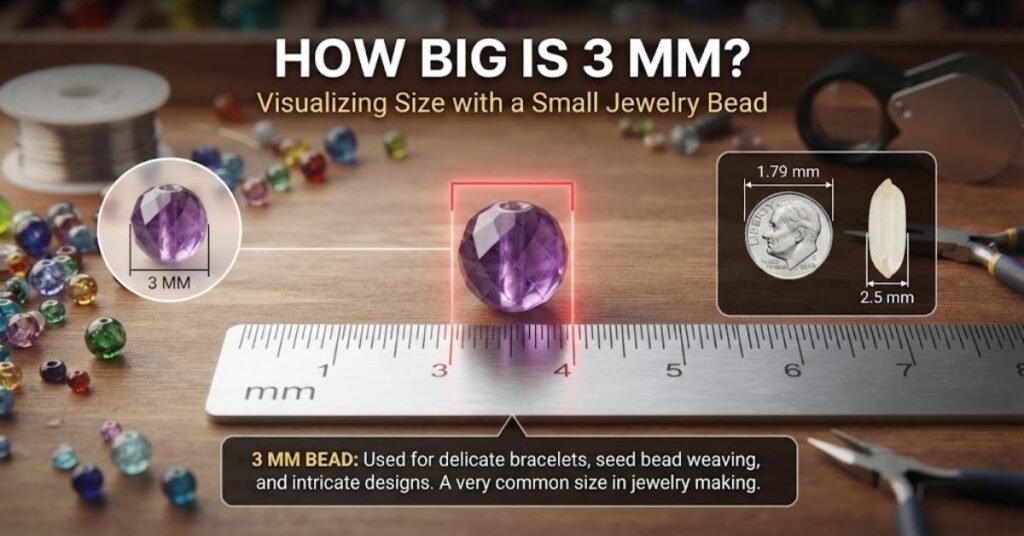
Anyone into jewelry making knows this size by heart. A small jewelry bead used in necklaces, bracelets, and earrings often sits right at 3mm in diameter.
Crafters buying bead size charts online run into this number constantly. It’s one of the most common bead measurement standards for handmade accessories, especially delicate designs where bulkier beads would look wrong.
If you’re new to craft projects, start noticing bead sizes at hobby stores. You’ll spot 3mm beads everywhere once you know what you’re looking for, and it makes threading beads for finer decorative designs so much easier to plan.
3. Thick Pencil Tip
A freshly sharpened thick pencil tip, especially on softer sketch pencils, often measures close to 3mm at the graphite point. This matters more than you’d think for drawing tools.
Artists doing bold lines or heavy shading prefer thicker leads because they lay down darker marks without snapping. That graphite measurement directly affects how a sketch feels on paper.
If you’ve ever wondered why some pencils feel “chunkier” under pressure, this is part of the answer. Thicker tips survive rougher design work better than fine, needle-like points.
4. Tiny Screw Width
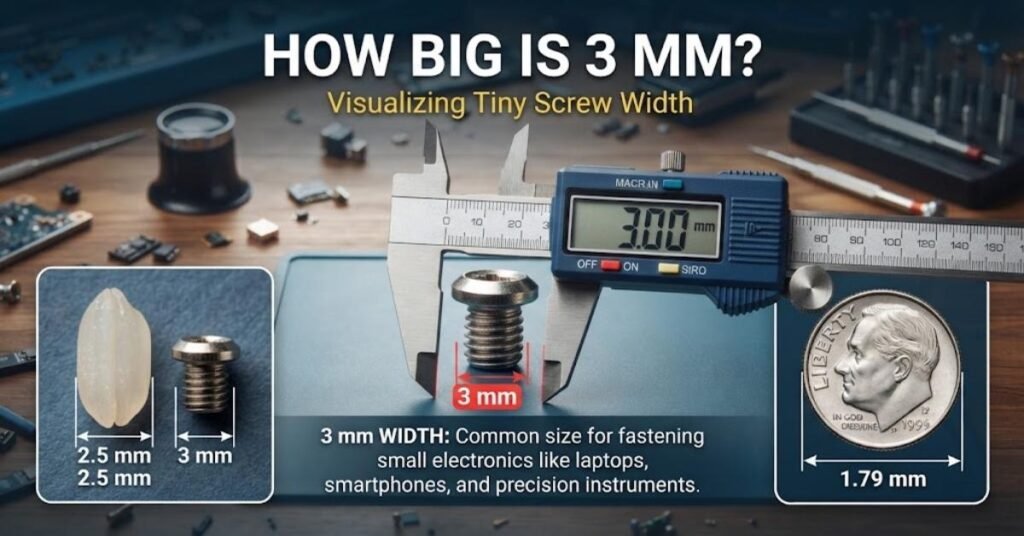
Open up an old phone or a pair of glasses and you’ll find tiny screws holding everything together. Many of these measure around 3mm in width, which is why a regular screwdriver won’t touch them.
This is where a precision screwdriver becomes essential. Electronics repair techs and hobbyists working on laptops, phones, and watches deal with this exact screw width constantly.
Losing one of these small hardware parts feels disproportionately stressful, doesn’t it? That’s because replacements aren’t always sitting in your local hardware store. Precision work demands precision parts.
5. Small Seed Bead
Slightly different from jewelry beads, the seed bead used in intricate beadwork also lands near 3mm. These tiny rounds show up in fashion accessories, embroidery, and detailed craft supplies kits.
Bead sellers often list seed beads by number sizing, but converting that to millimeters helps buyers picture the actual scale before ordering. Nobody wants a surprise when the package arrives.
If you’ve ever seen elaborate beaded patterns on clothing or accessories, seed beads are usually the reason. Their small size lets designers create incredibly fine detail.
6. Earbud Cable Thickness
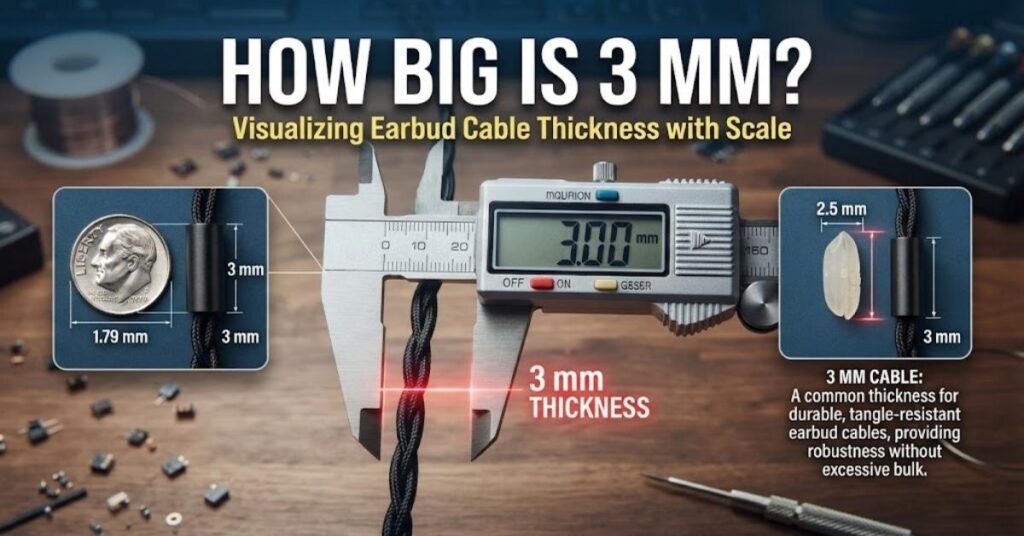
Check the cord on a basic pair of earphones. The earbud cable thickness on many models runs close to 3mm, balancing flexibility with wire protection.
Too thin, and the cable snaps easily. Too thick, and it feels stiff and annoying to untangle. Manufacturers land on this cable design sweet spot to boost product durability without sacrificing comfort.
Next time your charging cable feels unusually thick or thin compared to another one, this is often why. Small differences in cable thickness change how a product feels in daily use.
7. Coarse Salt Crystal
Just like peppercorns, a coarse salt crystal, the kind used for finishing dishes or salt grinders, typically measures near 3mm. This salt crystal size is larger than table salt on purpose.
Chefs like coarse salt because it dissolves slower and adds texture. That larger crystal size is a functional choice, not just a random shape.
Next time you’re cooking, compare a pinch of coarse salt to your fine table salt. The size difference is obvious once you’re actually looking for it.
8. Thin Plastic Sheet
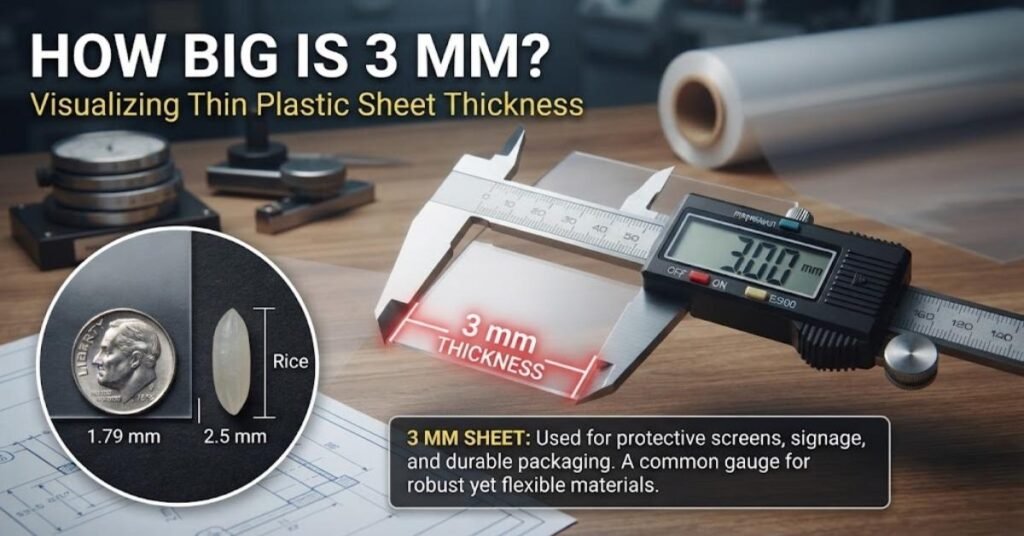
Packaging, protective covers, and some phone cases use a thin plastic sheet close to 3mm thick. This plastic thickness offers a bit of rigidity while staying lightweight and easy to cut.
Plastic material at this thickness bends without cracking easily, which makes it popular for everyday protective gear. It’s sturdy enough to matter, thin enough to ignore.
You’ve probably handled dozens of these sheets without ever checking the exact product specifications. Now you know roughly what you were holding.
9. Watch Screw Head
Inside a mechanical or quartz watch, the watch screw head securing internal components often measures right around 3mm. These watch parts demand serious accuracy during assembly and repair.
A watch repair technician typically works under a magnifying lens, since parts this small are nearly impossible to handle with the naked eye alone. One wrong twist and you’ve got a scattered mess of mechanical parts on the table.
This level of precision work is exactly why watchmaking is respected as a craft. Every tiny device part has to fit perfectly for accurate movement to keep ticking.
Related Size Comparisons
Since 3mm rarely stands alone in real projects, here’s how it stacks up against other common measurement conversion figures people search for.
- 2mm is noticeably thinner, close to a fine seed bead or thin wire
- 6cm equals about 20 times the length of 3mm
- 5 inches to 22 inches covers everything from a small phone screen to a laptop display
Keeping a mental conversion chart like this helps whenever you’re comparing object size across different projects, whether that’s crafting, shopping, or repair work.
Why Small Measurements Matter More Than You Think
It’s easy to dismiss a tiny measurement like 3mm as unimportant. But in online shopping, especially for jewelry sizes, hardware, or craft supplies, getting this number wrong means returns, wasted money, and frustration.
Students, crafters, artists, electronics users, and repair workers all rely on accurate length measurement at some point. A tiny miscalculation in physical dimensions can throw off an entire project.
That’s the real value of learning how to visualize 3mm properly. It’s not about memorizing a number, it’s about building instinct so future decisions come faster and with fewer mistakes.
FAQs
How big is 3mm in inches?
3mm converts to roughly 0.118 inches, just under one-eighth of an inch. It also equals 0.01 feet, though that’s rarely how anyone actually thinks about it in daily life.
What common object is 3mm big?
A black peppercorn and a small jewelry bead are two of the most relatable 3mm examples. Both are things most households already have lying around somewhere.
Is 3mm easy to see?
Yes, though it’s on the smaller side. You can see it clearly up close, but from a distance, it tends to blend in or disappear entirely.
What does 3mm look like?
Picture the width of a thick pencil tip or a stack of three stacked credit cards. Both give you an honest visual reference without needing any tools.
How can I estimate 3mm without a ruler?
Use your fingernail edge, stack a few cards, or grab a seed bead from a craft kit. All three methods offer a fast, reasonably accurate quick estimate.
Conclusion
Three millimeters might sound insignificant on paper, but it shapes daily decisions more than most people realize, from picking the right bead for a bracelet to fixing a wobbly pair of glasses. Once you connect this small measurement to real objects like peppercorns, pencil tips, and screw heads, guessing size stops being a guessing game.
Next time you spot “3mm” on a product page, you won’t need a ruler. You’ll already know exactly what you’re looking at.
Got a project where getting the size right actually matters? Drop a comment below and share what you’re working on. Someone else reading this might be stuck on the exact same question.

Ethan Whitmore is the editor and administrator of Stylovix, dedicated to making measurements, conversions, sizes, and dimensions simple, accurate, and easy to understand.
