
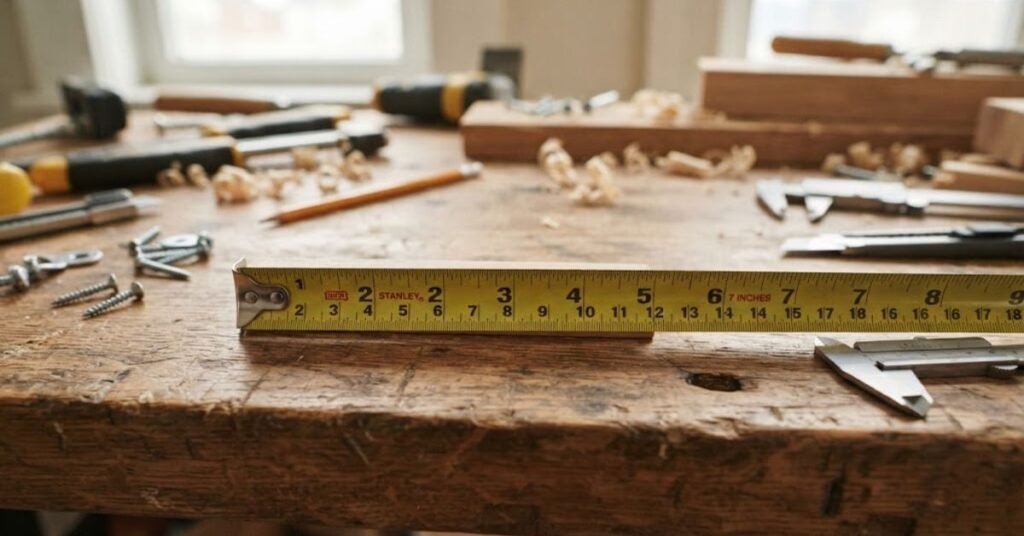
Ever tried to picture how long is 7 inches without grabbing a ruler? You’re not alone. Most of us only think in inches when we’re assembling furniture or arguing about TV screen sizes.
This guide fixes that gap for good. You’ll get eleven everyday objects that measure close to 7 inches long, plus a few extra ones most articles skip. By the end, you’ll be able to eyeball a 7-inch measurement almost as fast as you’d guess someone’s height.
Common Items That Are About 7 Inches Long
Picture a dinner fork sitting next to a paperback book. Now imagine a kitchen knife on the counter beside them. Different shapes, different jobs, but all landing around the same length.
That’s the whole idea behind this list. Instead of memorizing a number, you attach it to something you already touch every day. A hand span, a notebook, a tablet screen, these are things you’ve held a hundred times without ever checking their dimensions.
We picked items from the kitchen, the office, the bathroom, and even your wallet. That spread matters. When you have multiple visual references across different rooms, the number “7” stops feeling abstract and starts feeling familiar.
How Big Is 7 Inches?
In plain terms, 7 inches equals 17.78 centimeters, or 177.8 millimeters if you like extra precision. Switch to feet and it comes out to roughly 0.58 feet, which is just under two thirds of a foot.
If meters are your thing, that’s 0.178 meters. None of these numbers mean much on their own though. That’s exactly why length comparison with real objects works better than staring at a conversion chart.
Here’s a quick breakdown for anyone bouncing between the imperial system and the metric system:
- 7 inches = 17.78 cm
- 7 inches = 177.8 mm
- 7 inches = 0.58 ft
- 7 inches = 0.178 m
Keep that table handy. You’ll use it more than you’d expect, especially while shopping online for anything with listed screen size or drawer depth.
1. Standard Kitchen Knife
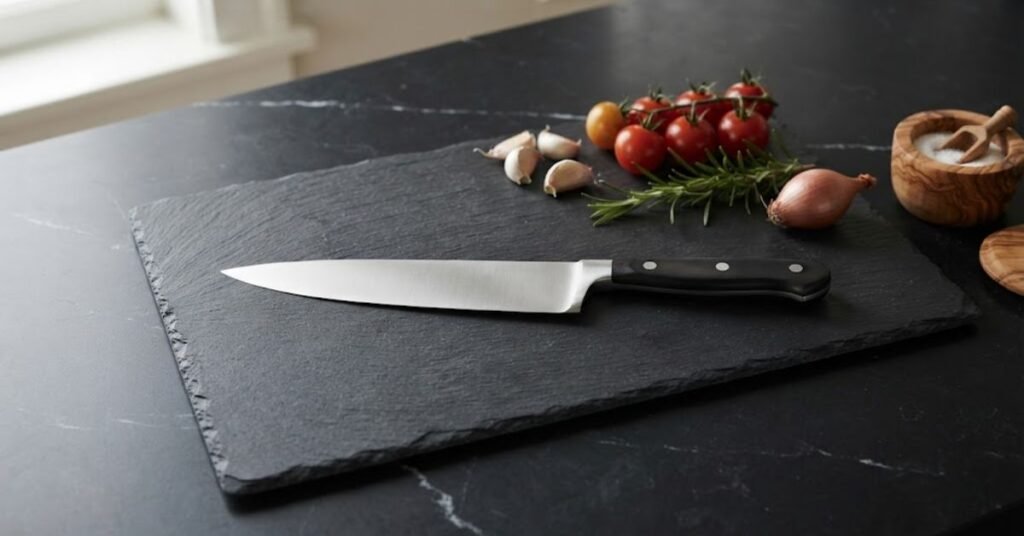
Grab any standard kitchen knife from your drawer and check the blade. Most chef knife blades run close to 7 inches from tip to handle. It’s actually the most common size sold for home cooking, right between a small utility knife and a full-length chef’s blade.
Home cooks love this size because it balances control with reach. Too short and you’re sawing at vegetables. Too long and it feels clumsy on a small cutting board. Seven inches hits the sweet spot for chopping, slicing, and dicing without fighting the blade.
Next time you’re prepping dinner, glance at your knife before you start cutting. You’ll notice how naturally it fits your hand at that length, and that’s no accident.
2. Medium Tablet Screen

A medium tablet screen, measured diagonally, often lands right around 7 inches. Think of the smaller electronics in the tablet lineup, not the big 10 or 12 inch models. This compact tablet size is popular for reading, browsing, and watching videos on the go.
Why does the size matter here? Because a 7 inch display is small enough to slip into a bag but large enough that reading doesn’t strain your eyes. It’s the middle child of the tablet family, and honestly, it’s underrated for portability.
If you’ve ever compared a phone screen to a tablet screen, you already have a rough sense of this 7-inch measurement. The jump from phone to tablet is noticeable, but this size keeps things manageable.
3. One and a Half US Dollar Bills
Here’s a fun one. Line up one and a half US dollar bills end to end and you’re staring at roughly 7 inches. A single dollar bill measures about 6.14 inches, so adding half of another gets you close enough for quick mental math.
This trick works great when you’re out and about with no measuring tools nearby. Got cash in your wallet? You’ve got a built-in length converter. It sounds silly, but bartenders, cashiers, and anyone who handles currency daily use tricks like this without even realizing it.
Next time you need a rough estimate and your wallet’s the only thing in reach, you know exactly what to do.
4. Adult Hand Span (Thumb to Pinky)
Stretch your hand out wide, thumb to pinky finger, as far as it’ll go. For most adults, that hand span measures somewhere between 7 and 9 inches. It varies by person, but 7 inches sits on the smaller end of that typical range.
This is probably the handiest trick on this whole list. You always have your hand with you, so you never need a physical ruler for a rough estimate. Builders, tailors, and craftspeople have used their palm and fingers as backup measuring tools for centuries, long before tape measures were common.
Try it yourself right now. Spread your hand next to your phone or a book and compare. You might be closer to 7 inches than you thought.
5. Paperback Book Height
Most paperback books aren’t measured by width, they’re measured by height, and that height often falls close to 7 inches. Standard mass market paperbacks run a bit shorter, but many trade paperbacks land almost exactly at this mark.
Next time you’re arranging your shelf, take a paperback and hold it beside a hardcover. You’ll spot the height difference immediately. That gap you’re seeing is basically the difference between a 7 inch book and something several inches taller.
Bookworms unknowingly interact with this measurement constantly. It’s one of the most overlooked everyday reference objects simply because nobody thinks to measure their reading pile.
6. Large TV Remote Control
Universal or large TV remote controls, especially the ones loaded with buttons for multiple devices, often stretch to around 7 inches long. Compare that to a basic streaming stick remote, which is usually much shorter and slimmer.
The extra length on these remotes comes from packing in more buttons: volume, channels, input switches, and app shortcuts all need space. It’s a practical size too, long enough to grip comfortably without feeling like you’re holding a toy.
Check your own remote tonight. If it feels a bit bulky compared to your phone, there’s a decent chance it’s brushing right up against that 7 inch mark.
7. Hairbrush
A standard bathroom hairbrush, minus the extra long handle styles, frequently measures close to 7 inches from top to bottom. Travel-sized and compact hairbrush versions sometimes trim closer to this length specifically so they fit in smaller bags.
This is a great one to check physically. Open your bathroom drawer and measure your own brush. You’ll likely find it’s not too far off, especially if it’s a basic paddle or cushion brush style rather than a long styling brush.
Travelers packing a toiletry bag often don’t realize how much this small detail affects bag compartments and overall packing space.
8. Small Ruler
It sounds almost too obvious, but a small ruler, the kind kids use in school, is frequently 7 inches instead of the full 12 inch standard. These shorter rulers fit neatly into a pencil case without taking up unnecessary room.
Schools and offices often stock these smaller versions specifically because of their compact size. They’re easier for kids to handle and easier to store in tight spaces like a desk drawer. If you’ve got old school supplies lying around, dig one out and check the length yourself.
It’s a small irony that the very tool meant to measure things is itself a perfect example of this measurement.
9. Notebook Width
Flip a standard notebook sideways and check the notebook width rather than the height. Many common sizes fall right around 7 inches across. This applies to plenty of spiral notebooks, composition books, and even some pocket journal styles favored by writers and students.
This measurement matters more than people realize when it comes to backpacks and bags. A notebook that’s 7 inches wide fits neatly into most office supplies organizers and desk space setups without wasted room.
Next time you’re notebook shopping, flip it sideways before you buy. That width tells you more about how it’ll fit your bag than the height ever will.
10. Dinner Fork
A standard dinner fork, from tip to handle end, typically measures close to 7 inches, sometimes just a touch over. Compare that to a smaller dessert fork, which trims down noticeably in length to match its lighter use.
Cutlery sets are actually a sneaky good place to learn about proportional sizing. Forks, knives, and spoons are all designed relative to each other, and the fork usually anchors that 7 inch range.
Set your table tonight and take a second look at your utensils. You’re handling this exact measurement every time you sit down to eat.
11. Sunglasses (Unfolded)
A pair of sunglasses, fully unfolded with the temple arms extended straight out, often measures close to 7 inches from end to end. Folded down for a sunglasses case, they shrink considerably, but stretched flat they hit this familiar mark.
This one surprises people because sunglasses feel small in your hand. But once you straighten out both arms and the frame front, the total length adds up quickly.
Try it with your own pair. Lay them flat on a table and measure end to end. You’ll likely land somewhere close to this number.
Bonus: More Everyday Objects Around 7 Inches
Since you’re already thinking in this range, here are a few extra items worth knowing. Consider these your bonus visual references for future guesswork.
- A standard envelope used for letters and documents
- A drawer organizer tray section in many kitchen setups
- A toolkit screwdriver, handle to tip, in mid-size sets
- A folded road map or document holder pocket
- A smartphone with a large case attached, front to back edge in some models
These extras round out your mental library. The more objects you attach to a single number, the faster your brain recalls it later without needing a tape measure.
Why Learning Common Measurements Actually Helps
This isn’t just trivia for a slow afternoon. Knowing rough sizes without a ruler saves real time during everyday decisions, whether you’re packing a bag, checking if something fits a shelf, or comparing products online before buying.
Furniture shopping is a great example. Shelf spacing and furniture compartments are usually listed in inches, and if you can picture 7 inches instantly, you’ll know at a glance whether your books, tablet, or storage boxes will actually fit.
The same goes for crafting and school projects. Kids measuring out materials, or anyone handling stationery and toolkit items, benefit from this kind of quick mental math. It builds confidence without leaning on an app or measuring tools every single time.
How to Estimate 7 Inches Without a Ruler
Start with whichever object from this list you have closest at hand. A dollar bill and a half, your own hand span, or a notebook flipped sideways all work in a pinch.
Line the object up against whatever you’re trying to measure. Side by side comparison beats guessing blind almost every time, and your accuracy improves the more objects you practice with.
Over time, this becomes second nature. You’ll start noticing 7 inch objects everywhere, from your kitchen drawer to your office desk, and estimating length will feel less like guesswork and more like a skill you’ve quietly built.
FAQs
How long is 7 inches in centimeters?
Seven inches converts to 17.78 centimeters. If you need it in millimeters instead, that comes out to 177.8 millimeters, useful for anyone working with metric system tools or instructions.
Is 7 inches longer than a hand?
It depends on the hand. An average adult hand span measures close to 7 to 9 inches, so 7 inches sits right at the shorter end of a typical palm stretch from thumb to pinky.
What is the easiest way to estimate 7 inches?
Your own hand span or a dollar bill and a half are the fastest tools you’ll always have on you. Both give a solid estimate without needing any actual measuring tools nearby.
Is 7 inches a common measurement?
Yes, it shows up constantly in household items, from kitchen knives to notebooks to tablet screens. It’s a genuinely common measurement once you start paying attention to the objects around you.
Final Thoughts
Seven inches isn’t some obscure number stuck in a textbook. It’s your kitchen knife, your paperback book, your hand stretched wide open.
Once you connect a measurement to something real, it sticks. No conversion chart required, no app, just your own memory doing the work.
So next time someone asks how big 7 inches actually is, skip the math. Just hold up your hand, or better yet, grab a dollar bill and show them yourself.

Ethan Whitmore is the editor and administrator of Stylovix, dedicated to making measurements, conversions, sizes, and dimensions simple, accurate, and easy to understand.
